Every day, search engines handle over 8.5 billion search queries. Making your content appear in even a small percentage of those searches can make all the difference to a business. And at the moment, AI-aided content creation is giving content writers, marketers and business owners a huge advantage –if they know how to write AI SEO content that ranks properly.
The fact is that AI doesn't just generate rank-able content on its own. There are lots of people churning out AI-created articles, which are then absorbed into the abyss of the internet, never to be seen by even a single search visitor. The reason why some of it gets on page one and some doesn't is all about tactics, human oversight, and identifying the SEO principles that matter when learning how to write AI SEO content that ranks.
This instruction manual covers everything - one step at a time.
The Role of AI in Modern Content Creation
AI writing assistants such as ChatGPT, Claude, Jasper, and Gemini have revolutionized content generation. They are incredibly quick. Truly quick.
A highly experienced author may have spent hours on a piece, but in minutes, any AI can have something similar drafted.
But speed is only part of the story. AI tools excel at several specific tasks that make them genuinely valuable for SEO content:
- Generating first drafts at scale without sacrificing structural coherence
- Identifying content gaps by analyzing topics from multiple angles quickly
- Repurposing existing content into different formats — blog posts into FAQs, long-form articles into listicles
- Maintaining consistent tone across large content libraries
- Brainstorming keyword clusters and related semantic terms
What AI can't do is understand your audience the same way you do. It doesn't know your brand tone of voice, your customers' real problems, or the industry-specific knowledge that turns run-of-the-mill content into truly valuable information. Human editing is not an add-on; it's a requirement.
Imagine an extremely intelligent research assistant who can write quickly but can benefit from an intelligent editor, so the work turns out great.
How to Write AI SEO Content That Ranks
Getting AI to generate content is just a matter of having it generate content. Getting it to generate content that ranks is something else entirely, requiring a dedicated SEO strategy built on top and understanding how to write AI SEO content that ranks effectively.
1. Start With Thorough Keyword Research
Before you prompt an AI tool, know exactly what you're targeting. Use tools like Ahrefs, SEMrush, or even Google's free Keyword Planner to identify:
- Primary keywords — the main term you want to rank for
- Secondary keywords — related terms that support the primary topic
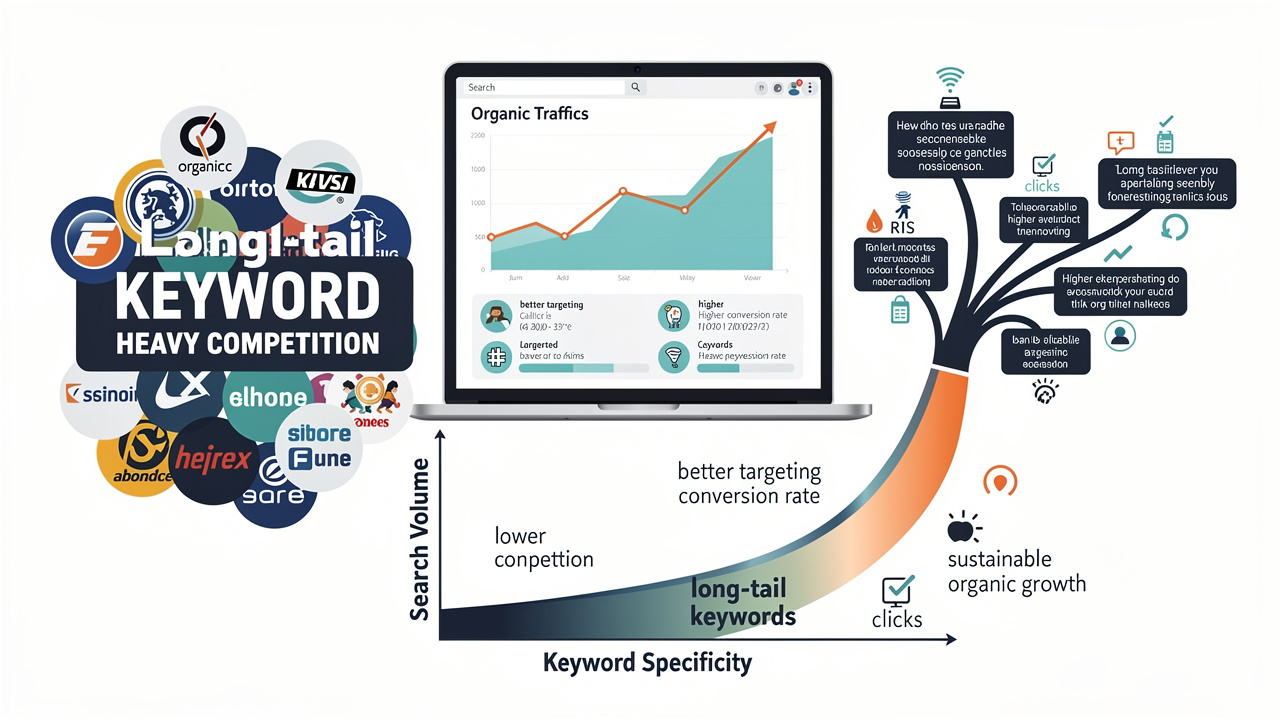
- Long-tail variations — longer, more specific phrases with lower competition and often higher conversion intent
Then given to your AI what you are targetting. Don't just say "write me an article on content marketing." Say "write me a 1200 word article on the keyword "content marketing strategy for small business" using the related keywords of "content calendar," "audience targeting," and "content distribution. Specifity in your prompts results in a massive increase in quality.
2. Optimize for Search Intent
Google's algorithm is complex enough to interpret why a user conducts a search, rather than just what was searched. There are four broad categories of intent:
| Intent Type | What the User Wants | Content Format |
|---|---|---|
| Informational | To learn something | Blog posts, guides, explainers |
| Navigational | To find a specific site | Brand pages, landing pages |
| Commercial | To research before buying | Comparisons, reviews |
| Transactional | To make a purchase | Product pages, pricing pages |
Align your AI content optimization to the right intent. For an informational question, a listicle is perfect. For the buyer, it's near useless.
3. Structure Content for Readability and Crawlability
Search engine spiders crawl the content in a structured manner. They seek for well-organized structure - h1/h2/h3 hierarchy, proper flow and well-organized information. AI tools are very capable of generating such structure, but you should make sure the output contains:
- A single, clear H1 containing the primary keyword
- H2 subheadings that break content into logical sections
- Short paragraphs (3-4 sentences maximum for online reading)
- Bullet points and numbered lists where appropriate
- Internal links to related content on your site
4. Add E-E-A-T Signals Manually
Google's guidelines on quality mention Experience, Expertise, Authoritativeness, and Trustworthiness (E E A T). AI content under standard settings has none of these signals. You must add them in yourself to use the content effectively:
- Include author bios with real credentials
- Cite authoritative external sources (studies, industry reports, government data)
- Add first-hand examples or case studies from your actual experience
- Reference specific dates, statistics, and named experts
Certainly the most under-rated step. How many times have you seen this skipped by the average marketer?
It's the reason your AI content is not hitting.
Tools and Techniques for Optimizing AI Content
Several tools work very well in conjunction with AI writers so as to optimize SEO even more and implement effective SEO strategies for AI writing.
• Surfer SEO—evaluates the highest ranked pages for your target keyword and provides a content score (word count, keyword density, outline, top heading structure, and more). Before hitting publish, run your AI draft through Surfer.
Clearscope—Like Surfer but more powerful for mining semantic keywords; those terms Google is looking for in high quality content.
Grammarly or Hemingway Editor - Not directly SEO tools, however readability affects bounce rate and bounce rate, in turn, indirectly affects the ranking. Well-formed, readable sentence structure helps to retain visitors.
Google Search Console – Track your desired keywords' impression, click, and average position once you have published, provided as a free service. Gain insight into what truly generates clicks and what doesn't.
Originality.ai—A detection tool for both plagiarised content and AI-produced text. Certain publishers and clients check whether the content you've produced has been generated by AI and demand that it passes. This tool will allow you to distinguish how much needs much more heavy human editing to produce human-quality work.
Examples of Successful AI SEO Content
Many famous brands or content teams has introduced AI into their workflow.
HubSpot Moreover, its blog team utilizes artificial intelligence for drafting and research, followed by manual editing, focusing on the voice of the brand, factual accuracy, and search optimization. They have hundreds of Google-top ranking pieces on fiercely competitive marketing keyphrases.
Bankrate* and other finance publishers employ AI to produce early drafts of rate-comparison and product-review articles which are then overlaid with human-confirmed data, analyst and expert insights, and compliance efforts. The pieces regularly rank due to the AI managing the structure and volume of content and humans adding credibility and authenticity.
The pattern is clearly repeated over and over again in successful cases; it is Human moderates quality, accuracy, and differentiation, while the AI does all the drafting.
Actionable Takeaways
Implementing AI SEO content effectively doesn't require a massive budget or technical expertise. Start with these concrete steps:
- Conduct keyword research first — always know your target terms before prompting AI
- Write detailed, specific prompts that include keywords, intended audience, word count, and content structure
- Edit every AI draft — treat the output as a first draft, not a finished product
- Add E-E-A-T signals manually by incorporating real examples, expert citations, and author credentials
- Run drafts through Surfer SEO or Clearscope to optimize keyword coverage before publishing
- Monitor performance in Google Search Console and update content regularly based on real data
- Match content format to search intent — don't publish a listicle when Google is ranking long-form guides for your target keyword
- Prioritize readability — short paragraphs, clear headings, and natural language keep readers engaged and reduce bounce rates
Conclusion
AI-created content that ranks isn't just about hitting "create" and crossing your fingers. It's about brilliant keyword planning, precise prompting, meticulous human editing, and persistent optimizing. The writers and marketers succeeding with AI are not abandoning SEO knowledge—they're enhancing it.
You've got the tools. The techniques are proven. What makes content rank and content vanish is just a matter of the desire to combine the capabilities of AI with true human skill over and over again, over time. Begin with one article, use these techniques, see what happens and improve your results.
This is how you develop content that does what you want it to.