Introduction: Why AI Is Changing Real Estate Content
Real estate has always been a relationship-driven industry.
But relationships don't start at the handshake anymore - they start online, often at 11pm when a potential buyer is scrolling through listings on their phone.
That shift in behavior has made content creation absolutely critical for agents, brokers, and property marketers who want to stay competitive. Understanding how to write AI real estate content that converts buyers and sellers has become essential for success in today's digital marketplace.
Here's the thing: producing high-quality, targeted content consistently is genuinely hard.
Market conditions change fast.
Buyer preferences shift.
Seller expectations evolve.
And most real estate professionals are too busy closing deals to sit down and write compelling blog posts, property descriptions, or email campaigns every week.
That's where AI steps in.
Not as a replacement for human expertise - but as a powerful assistant that helps real estate professionals create content faster, smarter, and with better results.
AI tools can analyze data, generate drafts, personalize messaging, and optimize copy for search engines. AI content generation for real estate has revolutionized how professionals approach their marketing strategies.
When used correctly, they don't just save time; they actually improve conversion rates.
Key Elements That Make Real Estate Content Engaging
Before you even open an AI tool, you need to understand what makes real estate content work.
Not all property descriptions are created equal.
Not all market reports get read.
The elements that consistently drive engagement include:
- Specificity over generality - "a bright, south-facing kitchen with quartz countertops and a view of the backyard garden" converts better than "a nice kitchen"
- Emotional resonance - buyers aren't purchasing square footage; they're buying a lifestyle, a future, a feeling of home
- Clear calls to action - every piece of content should tell readers exactly what to do next: schedule a viewing, request a report, call an agent
- Local authority - mentioning nearby schools, coffee shops, transit lines, and neighborhood quirks builds trust and context
- Honest, transparent language - overselling leads to disappointment; buyers who feel misled don't become clients
- Visual storytelling - content that pairs well with photography and video performs dramatically better across platforms
AI can help you hit all of these marks consistently, especially when you're managing dozens of listings or serving multiple markets simultaneously.
Leveraging AI for Market Analysis and Understanding Behavior
This is where AI really earns its place in the real estate content workflow.
Modern AI tools - platforms like ChatGPT, Jasper, and specialized real estate tools like Epique AI - can process and summarize market data that would take a human analyst hours to compile.
Practically speaking, here's how agents and marketers are using AI for deeper insights:
- Analyzing buyer search patterns to understand which property features are trending in specific zip codes
- Summarizing MLS data into readable market reports that sellers actually want to read
- Identifying seasonal demand shifts - for example, recognizing that waterfront properties in a given region spike in spring search volume and adjusting content calendars accordingly
- Profiling buyer personas based on demographic data, income brackets, and browsing behavior to craft targeted messaging
- Tracking competitor listings and identifying content gaps that your agency can fill
Understanding seller behavior is equally important.
Sellers respond to different triggers than buyers.
They want to know their home's value, how quickly comparable homes are selling, and what improvements actually increase sale price.
AI can help generate content that speaks directly to those concerns - market trend summaries, pricing guides, home prep checklists - without requiring hours of manual research.
Real Examples of AI-Generated Content in Real Estate
The proof is in the results.
Several real estate companies have already integrated AI into their content pipelines with measurable success.
Zillow uses AI to generate property descriptions at scale, pulling from listing data to produce readable, consistent copy across millions of properties.
Their model doesn't replace agent expertise - it drafts, and humans refine.
Compass has integrated AI tools that help agents craft personalized outreach emails based on client behavior and property match scores.
Open rates on these campaigns reportedly outperform generic newsletters by a significant margin.
Smaller independent agencies have also seen wins.
One boutique firm in Austin, Texas, started using AI to generate weekly neighborhood spotlight posts - basically short articles covering local market stats, new business openings, and recent sales trends.
Within six months, their website traffic had increased by roughly 40%, and they attributed a meaningful portion of new client inquiries to those posts.
The pattern is clear: AI-generated content works best when it's grounded in real local data and refined by someone with genuine market knowledge.
How to Write AI Real Estate Content That Converts
Getting results from AI real estate content isn't automatic.
You need a strategy.
Here are the proven tactics that really move the needle:
- Always bring clarity to your audience - is the message aimed at first time buyers, high net worth investors, relocating families, or downsizing empty nesters? The tone and content should shift dramatically depending on who will be reading
- Feed the AI tools specific inputs - the more context you give the model, the better the results; add name of neighborhood, target price range, specific features of the house, emotional benefit outcome you want to produce
- Leverage the AI as a first draft session, not final product - review everything before pushing publish; AI can miss subtle local differences, get important facts wrong, or help you create language that is correct but doesn't match your unique tone
- Customize en masse - AI can enable you to put together tailored property alerts, market reports, follow-up messages for hundreds of leads without sounding like a robot, as long as you do it the right way
- Experiment with different frameworks - some buyers and sellers love bite size social media posts, while many more prefer comprehensive neighborhood or market analytics documents; AI will help you automate both
- Tell a story - tell AI to place your message inside a story, e.g. a young couple looking to buy their first place or a long-time seller seeking to move up into a new home. Storytelling has the power to deepen a message in a way that statistics and delivery alone can't
These real estate copywriting techniques ensure your AI-generated content resonates with your target audience and drives meaningful engagement.
SEO Strategies: Making Sure Your Content Gets Discovered
Producing good content that is never read is a colossal waste.
In real estate content, SEO strategy is more than just useful - it's mandatory and AI offers excellent support.
Real estate searches are hyper-local.
Buyers and sellers look up things like "[neighborhood] 3 bedroom homes" or "average home prices in [city] 2024" and your agents' content must mirror these search phrases coherently, not awkwardly.
AI instruments will support:
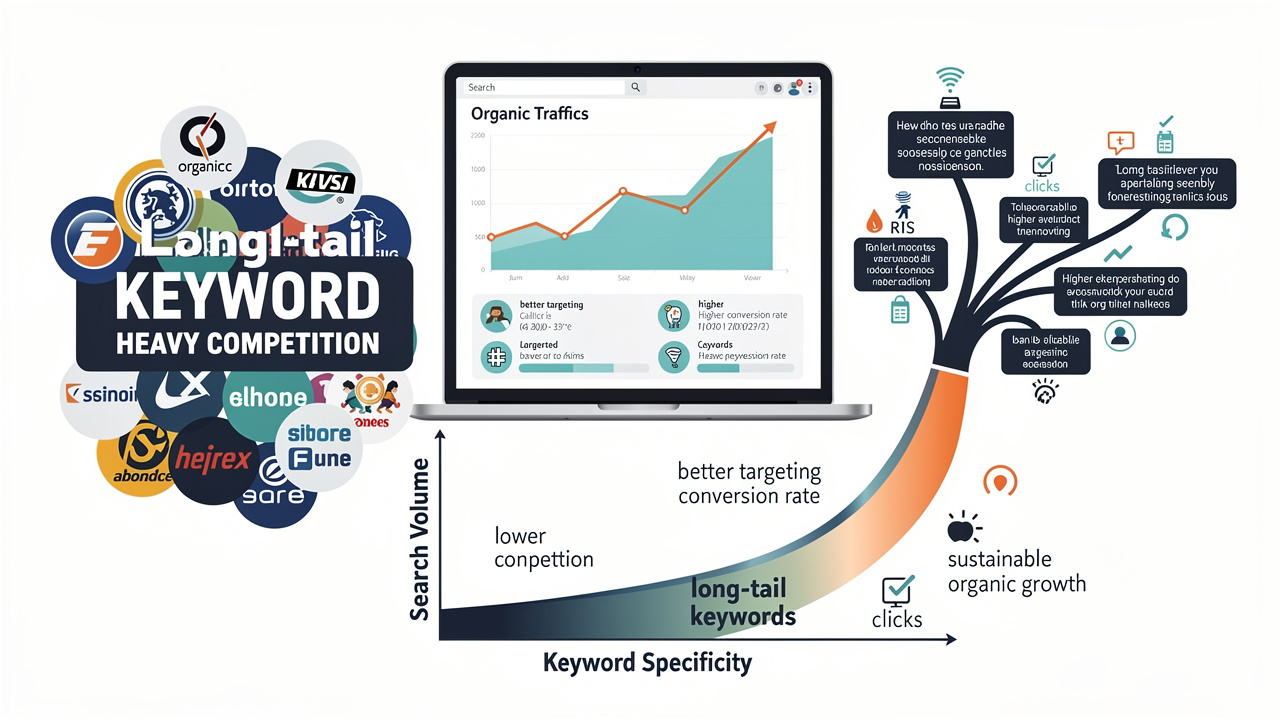
- Keyword integration studies - finding applicable long-tail, high-volume, low-competition industry words and phrases
- Google Meta Description tools - forming powerful, if repetitive, summaries that increase your chances to appear prominently in search results
- Suggestions for internal linking patterns - placing links that connect your content together in a strong search-engine aesthetic
- Content optimization tools - creating cohesive outlines, bullet points, and central headings optimized to attention and readability
- Optimization for long-range industry words - wrapping specific long-tail search phrases into content that targets ready-to-purchase consumers
One crucial reality: Search engines have grown quite refined at sniffing out thinned out, keyword robot content.
Too much artificial single-minded language will actually drag your positioning down.
The battle is for content that's value-adding to visitors and mastered for engines - combine both to succeed.
AI Real Estate Content That Converts Buyers and Sellers
The real estate agents and brokerages that will excel in the next five years aren't necessarily the ones with the largest spend on advertising and the most homes on the market.
They're the ones who learn to communicate faster, more personally, and more clearly than anyone else around.
Using AI content applications enables that transition - but only if you implement it correctly.
The AI engines keep your volume and consistency; your expertise ensures your message has life and character.
All three result in content that results in successful conversations.
Begin with one content channel if this is new for you - perhaps property descriptions or a brief newsletter update on market activity - and do so for at least a month.
Watch your engagement metrics.
Tweak your input variables.
Expand.
The agents and firms getting ahead of this trend aren't waiting around for the rest of the business to catch up - and neither should you.