You've been around the block when it comes to SEO - keywords, links, page speed, mobile optimization... check, check, check.
But what about content quality? That's where you find the real gems on page one versus the forgotten content collecting dust bunnies on page seven. Understanding how to rank blog posts with ai content has become essential for modern SEO success.
The truth is, search engines have become impeccable.
Google's algorithm nowadays evaluates content like a sharp editor - it asks if your writing really answers the question, does it go deep enough on the subject, do people seem to find it actually useful? Things like bounce rates, time on site, click-through rates - all feed directly back to where you appear in search results.
Simply filling pages with keywords? It doesn't just fail to help, it hurts.
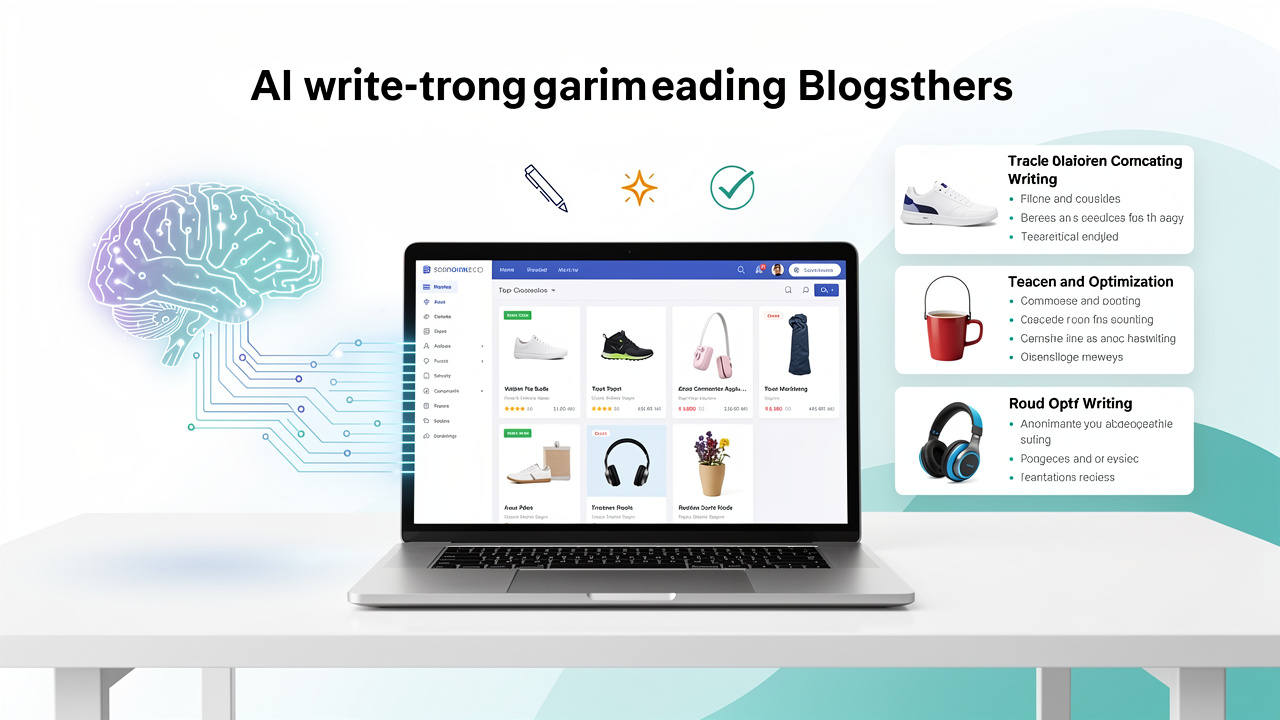
AI tools have swooped into this arena just in time, not to replace the human brain, but to act as a formidable sidekick that can fast-track your research, unearth valuable keywords, and help you create more in-depth, better-structured articles than ever before through effective AI content generation.
The Why Behind Quality Content Rankings
Before diving into the AI aspect, let's just confirm exactly what Google is rewarding these days.
Google's criteria are built around its E-E-A-T guidelines - Experience, Expertise, Authoritativeness, and Trustworthiness. An article that truly shows your knowledge, cites the proper sources and gives you specific, actionable advice will beat out bland fluff every time, regardless of what keywords it contains.
The main signals of content quality include:
- Depth and Coverage - Is this piece of content comprehensive?
- Readability - Can it be read easily and understood well?
- Relevancy - Does this answer the intent of the person searching?
- Originality - Is it unique, or just rehashing?
- Engagement - Do users stick around, share, and interact?
Luckily, with the right application, an AI tool can have a positive impact on every one of these metrics.
How to Rank Blog Posts with AI Content: Improving Writing
These modern AI content generators (think Surfer SEO, Jasper, Frase, ChatGPT, etc.) do much more than a glorified auto-correct. They analyze competing content, pinpoint semantic keywords, suggest improvements to structure, and even pick up on readability errors on the fly.
Keyword optimization is perhaps the most apparent advantage. Traditionally, keyword research has been a time-consuming, manual process in tools such as Ahrefs or SEMrush. Today, these advanced platforms can analyze your top 20 competitors, spit out all of the repeated keywords and phrases, and create a prioritized list for you in minutes.
Improving readability comes down to the individual sentence. AI can help spot overuse of the passive voice, excessively long sentences, and can suggest ways to phrase content more clearly. Why is this so crucial? Well, people are more likely to spend longer on readable pages - and when readers hang around, search engines see it as a sign of good quality.
Relevance, which often relates to semantic depth, is where AI truly shines. Search engines don't only look for your core keyword, they are now evaluating how well your article covers related topics to determine your authority. For an article about 'intermittent fasting', your AI tool might show that you need to touch on topics such as 'insulin sensitivity', 'eating windows', 'metabolic rate'. Without this semantic, comprehensive depth, even a beautifully written article will simply underperform.
Bringing AI Into Your Workflow: A Step-By-Step Guide
Step 1: Run a Keyword Analysis With Your AI Tool
Let's start by researching your topic. The quickest way to do so would be to run the keyword in Frase or any similar AI-powered writing tool that extracts data from Google's top-performing content.
What they'll offer:
- Questions that people often ask about the keyword.
- Related topics that should be covered in your article.
- How many times the main keyword should be included (and the other semantic ones).
Step 2: Use AI to Generate a Brief
Before you put a finger to the keyboard, use an AI tool like Surfer SEO or Frase to generate a comprehensive content brief.
Your brief should ideally include:
- The best possible word count based on top-ranked competitors.
- All headings, and sub-headings that ought to be covered in the article.
- Specific keywords that must be included in your article, and how many times.
- The questions that the article aims to answer.
- Top URLs from the competition to benchmark yourself against.
Step 3: Let the AI Help Create Your Outline
Plug in the outline provided to ChatGPT, or another writing platform and let it go. Just type a prompt into the system such as this:
"Can you generate a full, comprehensive outline of a blog post on [keyword] including these points and target [audience] with a [tone] tone?"
Be mindful of what comes out from the AI. Treat it more like building the frame of the house, than placing all the bricks.
Step 4: Human-AI Collaboration in Writing
This stage is for you to write the blog post, using AI only as a helper if needed. Staring into a blank page and drawing up an introduction? Ask your AI to whip out three variations for inspiration. Looking for a clear way to explain something complex? Let the AI write a version and then tweak it to match your voice.
Why this approach? You still lead with strategy, while AI helps with execution and implementation.
Step 5: Use an AI Tool for In-Content Optimization
Now that you have your article written, let's run a content analysis tool like Surfer SEO on it. This will analyse your article and suggest what areas need optimisation such as increasing keyword density, word count and so forth.
When a content optimisation tool like Surfer SEO gives an article a score over 70 - a generally good indication that the content can appear well within the Search Results pages - try not to get too obsessed. An excessively optimised article can read like an robot wrote it, which, believe it or not, will actually put readers off!
How to Rank Blog Posts with AI Content: Success Stories
2023 was a massive year for AI with brands such as HubSpot, among others, experimenting with and integrating AI to scale content creation with its established quality controls. Their plan involved having the AI generate its content on an initial draft level and having it edited by an actual person. This result was higher traffic volumes with very little difference in user engagement.
And a case study by mid-sized SAAS business, Omniscient Digital, demonstrated how well-produced, AI-driven content could rank on Google's first page within 90 days for competitive terms in its marketing industry using Frase for briefs and human expertise to finalize content.
The message here is clear: Use AI for speed and for technically sound, well-optimized pieces; use humans to infuse originality and connect with readers.
Best Practices for Polishing AI-Generated Copy
The Raw Output is a Drafting Draft That requires some editing. Period. Here are best practices to refine AI content appropriately:
-
Sprinkle in Personal Experience - The Specific Anecdotes, Opinions and Real-Life Examples are what make content authoritative and sound Human Google has been increasing emphasis on first-person experience signals as well.
-
Double-check every stat - AI hallucinates in a way that will have them confidently produce faulty statistics, misquoted quotes or antiquated information. You've gotta check this everything.
-
Inject personality - the nature of AI-generated content is a generally flat tone. Change things around: Include contractions, a variety of sentence length to include an occasionally abrupt, jarring one. Use the conversational style of AI when you want that- but make your content voice stand apart.
-
Make the Introduction Stand out - The AI- generated opener will almost invariably be flat and generic. Try to make yours grab the reader by the eyeballs by offering a compelling question, startling fact or punchy statement right off the jump.
-
Internalize the Internal Links - The AI won't necessarily know about what else is on your blog- and this can also help disperse authority around your site. Link to relevant blog post within your own content and you'll gain that benefit too.
-
Update "Frequently" - Content fresh is just flat out one of the things that ranking factors are made of. Have on the calendar an auto reminder once every 6 to 12 months to go back through your most successful AI'd up content and make any necessary updates on stats, examples, and recommendations.
Wrap Up
It isn't about tricking Google by gaming the system- ranking a blog post by leveraging these types of AI is about utilizing very powerful tools to write even better content much more efficiently through proven SEO optimization techniques.
The rules haven't changed around the "how to rank a blog post": quality content, strong relevance and an abundance of data still win out - in a great variety of ways. What has shifted-is just how quickly writers can attain that quality when it's made accessible to them.
We approach AI as a highly capable "right hand man", "research assistant," - perhaps, "drafting partner - - not as the writer we hope never checks what Google and the World Wide Web tells us.
Using AI efficiently lets you gather data, quickly create "blog post outlines"- and then utilize human insight and experience to complete the job. Quality in- plus excellent execution out- - that's what it takes. And we believe it more then ever, now, within this extremely competitive landscape of content creation.