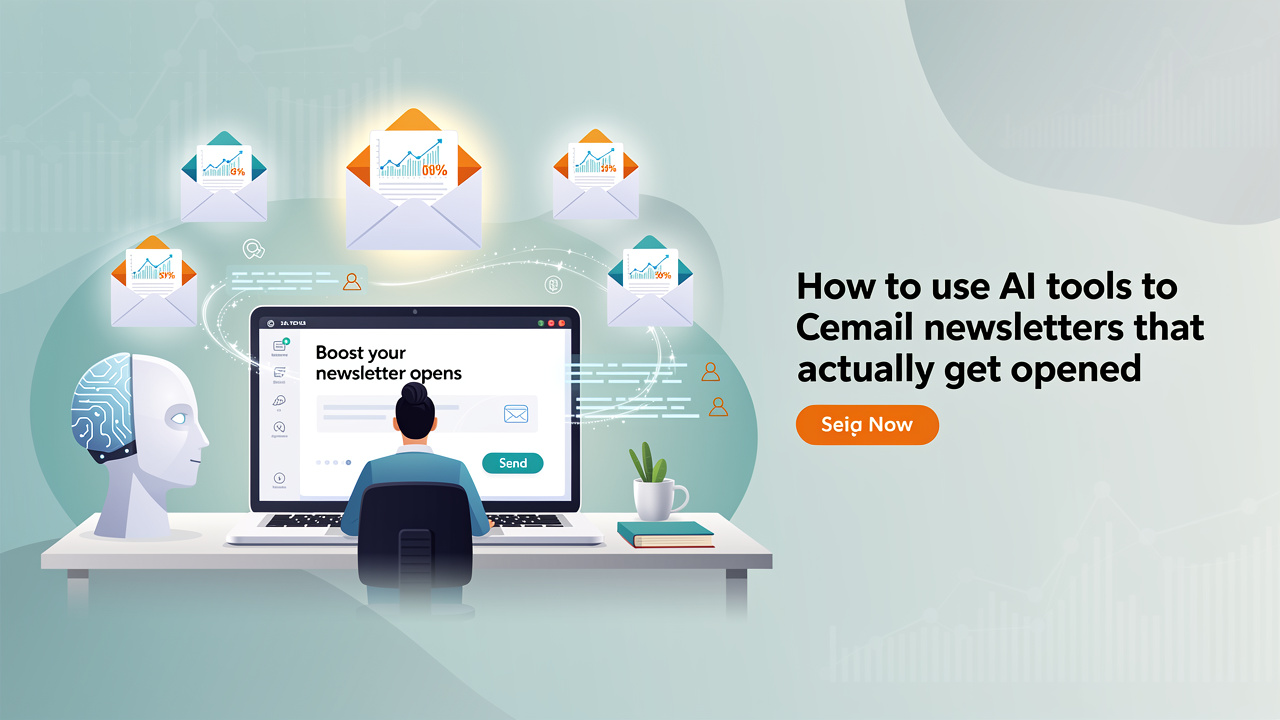
Learning how to use AI to write email newsletters that actually get opened is transforming the way businesses connect with their subscribers. Your email newsletters are your most direct channel to reach your subscribers. But let's face it: most go unread. Open rates in the 20-25% range are common across industries, meaning a huge chunk of your hard-won subscribers are missing your message entirely. Fortunately, AI tools are poised to change all of that - dramatically. Here's how to leverage the power of AI to turn your newsletters into must-read communications:
--- ## Why AI Should Be Part of Your Email Strategy
AI isn't just about getting words onto the page faster. It's about sharpening your entire approach through AI email marketing techniques. AI can help you:
- Understand your audience on a deeper level.
- Craft more persuasive and compelling copy.
- Test concepts more rapidly than ever before.
This leads to what we all want: increased open rates, better click-throughs, and subscribers eagerly anticipating your emails. While tools like ChatGPT, Jasper, Copy.ai, Mailchimp's AI capabilities, and ActiveCampaign aren't miracle workers, when used strategically, they can save you untold hours while significantly improving your email quality.
--- ## Step 1: Segment Your Audience BEFORE You Write
The most common, yet most ignored, email marketing strategy is segmentation. Treating your brand new subscriber the same as your decade-long loyal customer doesn't cut it. AI shines here. By analyzing subscriber data such as purchasing history, engagement level, location, and browsing habits, AI tools can reveal meaningful patterns. Platforms like Klaviyo and HubSpot utilize machine learning to automatically create dynamic segments.
Effective Segmentation Groups:
- Behavioral: Actions subscribers take (opens, clicks, purchases).
- Demographic: Age, location, job title.
- Lifecycle Stage: New, active, lapsed subscribers.
- Interest-Based: Content clicked previously.
With well-defined segments, your AI writing assistants can customize tone, word choice, and offers for each group, ensuring a relevant experience. An enterprise client won't receive the same messaging as a small business owner - and rightly so!
--- ## How to Use AI for Subject Lines
Subject lines are crucial when you learn how to use AI to write email newsletters that actually get opened. In those fleeting 40 characters, you need to earn a click. The decision often happens in less than two seconds. Tools like Phrasee and Persado are specifically designed to optimize email subject lines. They generate hundreds of options, score them against past performance, and predict which will resonate best with your target audience.
Proven Subject Line Tactics:
- Quantify: "5 Secret Ways to Boost Your ROI"
- Create Urgency: "Your Exclusive Offer Ends Tonight!"
- Address a Pain Point: "Tired of [Problem]? This Might Help."
- Spark Curiosity: "We Uncovered Something Surprising About [Topic]..."
AI excels here by churning out dozens of variations in minutes. Pick the top three, A/B test them, and let the data guide you. Mailchimp's Subject Line Helper is a great example of real-time analysis, alerting you to words that may trigger spam filters or are historically weak performers.
--- ## Step 3: Achieve Personalized Content at Scale
True personalization transcends adding a first name. It's about sending content tailored to the subscriber's actual interests. AI makes this feasible at a massive scale through email newsletter optimization. Here's how:
- Dynamic Content Blocks: ActiveCampaign and similar platforms allow you to swap out content elements based on subscriber tags. Someone interested in product demos gets different information than a blog reader.
- AI-Generated Copy Variations: Jasper can produce multiple versions of content blocks, each optimized for a different audience segment.
- Behavioral Triggers: If a subscriber recently explored a specific product category, AI can automatically send a newsletter highlighting related content shortly after.
The ultimate goal: Make each subscriber feel like the email was crafted just for them. This fosters much deeper engagement.
--- ## Step 4: Structure Your Newsletters for Easy Reading
Even the most brilliant content will fail if it's unreadable. AI writing tools can aid in creating emails that keep readers hooked from start to finish.
Effective Newsletter Structure:
- Lead with Value: Put your most important information upfront.
- Brevity: Keep paragraphs to two to three sentences.
- Emphasis: Use bold text for key takeaways.
- Clear CTAs: Include one direct call to action per section.
- Visual Breaks: Subheadings and dividers prevent overwhelm.
Tools like Grammarly and Hemingway Editor can analyze AI-drafted copy for readability, catching overly complex sentences. Don't underestimate visuals; a simple header or an icon can boost engagement time. Canva's AI tools can help generate professional visuals on the fly.
--- ## Step 5: Analyze, Iterate, Repeat
Writing is just half the battle; the other half is learning what works. AI-powered analytics platforms such as Seventh Sense predict the optimal sending time for individual subscribers, boosting open rates by up to 15%.
Critical Metrics to Monitor:
- Open Rate: Indicates subject line effectiveness.
- CTR: Shows content relevance and engagement.
- Conversion Rate: Measures how well your CTAs convert.
- Unsubscribe Rate: Reflects alignment between content and expectations.
- Spam Complaints: Signals potential intrusive messaging.
Use these insights to inform your AI prompts and strategy. If a certain style of subject line consistently performs well, train your AI to lean into that. If a segment isn't engaging, re-evaluate and refine your personalization for that group.
--- ## Best Practices for AI-Assisted Content Creation Some things to keep in mind when incorporating into your workflow: - Never skip the editing process. Your AI drafts are merely first drafts. Inject your own voice, tighten up awkward sentences, and make sure it doesn't sound like an automated robot wrote it.
-
Don't try to automate empathy. The best newsletters connect on a human level. Utilize AI for efficiency in building sections and ideas, but let your personality shine through to ensure authentic engagement.
-
Test, test, test. A/B testing is crucial. You need to continuously gather data on what works with your specific audience, building institutional knowledge that informs future strategies.
-
Maintain compliance. Ensure your email communications adhere to all relevant laws, such as GDPR and CAN-SPAM. AI tools do not automatically take care of compliance for you.
-
Quality input = quality output. The more specific you are with your prompts regarding tone, audience, and objectives, the better the results you'll get from the AI.
--- ## Tools Worth Trying
| Tool | Best For |
|---|---|
| ChatGPT | Brainstorming, drafting, rewriting |
| Jasper | Long-form newsletter content creation |
| Phrasee | Subject line optimization |
| Klaviyo | AI-powered segmentation and automation |
| Seventh Sense | Send-time optimization |
| Mailchimp AI | A beginner-friendly all-in-one solution |
-
Leverage AI subject line tools to rapidly create and test diverse subject line variations.
-
Personalization goes beyond using the recipient's name; it means delivering relevant content.
-
Structure is king. Keep paragraphs concise, use clear calls to action (CTAs), and incorporate visuals to boost engagement.
-
Track everything, and use the insights generated from your email campaigns to refine your AI prompts.
-
Always include a human editorial pass on AI-generated content.
--- ## Conclusion Ultimately, AI doesn't substitute for sound email strategy; it magnifies it. The fundamentals - understanding your audience, offering genuine value, and creating emails that are consistently worth opening - remain paramount. AI simply empowers you to execute these fundamentals more effectively, efficiently, and at a scale that was previously unattainable. Begin by picking one tool, segmenting a single audience, and launching one campaign. Measure your results carefully, and iterate based on what you learn. The companies seeing the most impressive gains from AI-assisted email aren't necessarily the ones using the greatest number of tools, but rather those who apply the right tools judiciously and consistently.