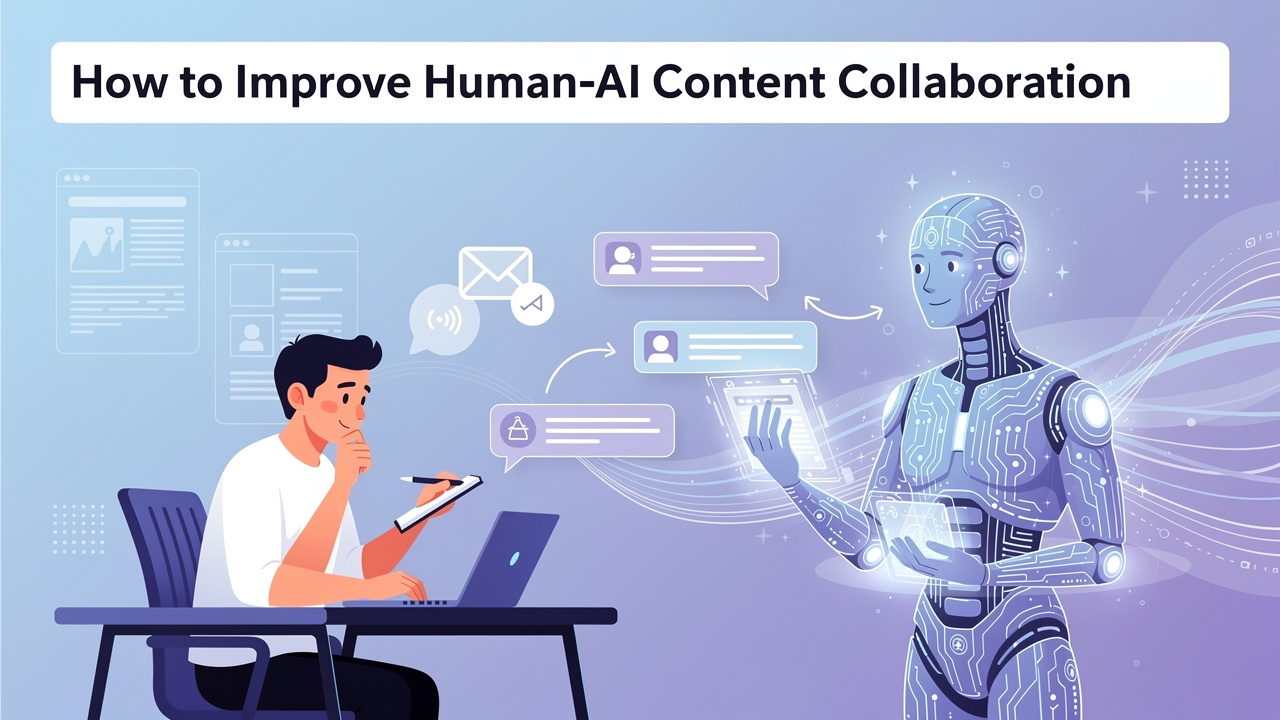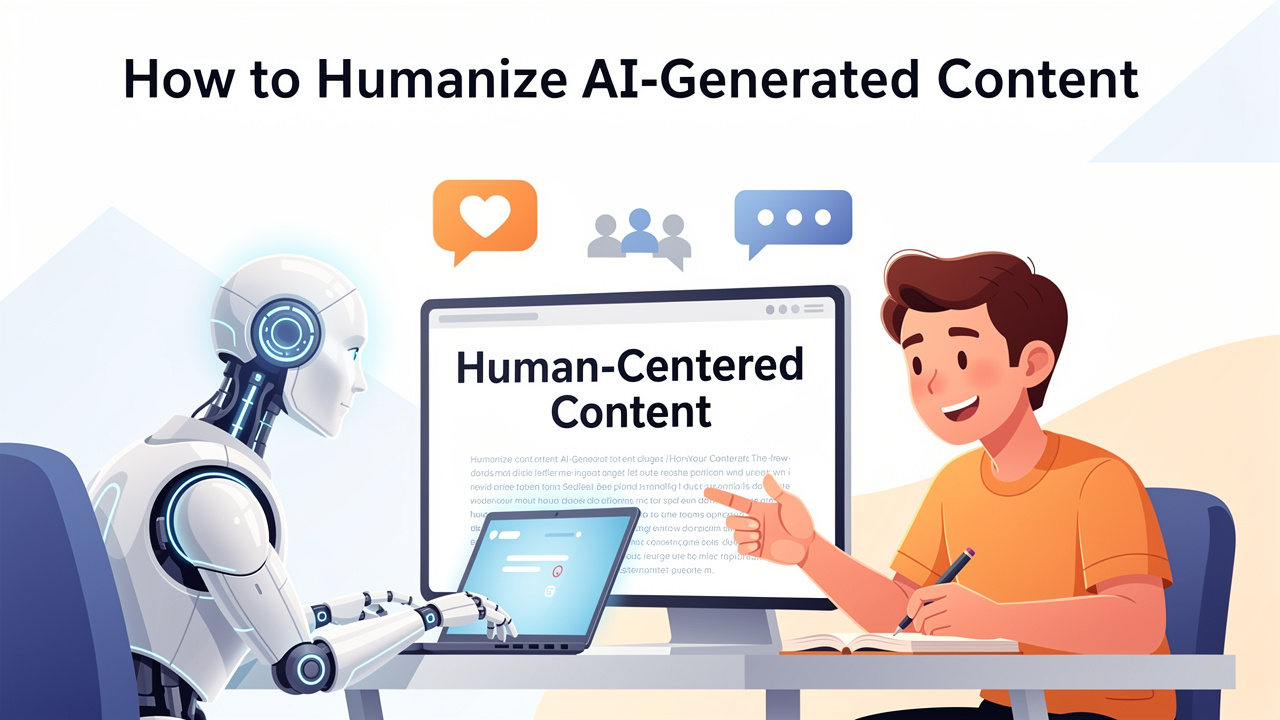
Artificial Intelligence is now a part of publishing. Learning how to humanize AI generated content has become essential for content creators who want to maintain authenticity and connection with their readers. AI is quick, scalable and fiercely effective — but at the same time often lacks the patina that your average reader can sense is there without actually being able to put a finger on it. The grammar is right.
The syntax makes sense. But there's something lacking. Human nature.
The great news: humanizing AI output is not magic. It's craft. And it is learnable.
Why Authenticity in AI Writing Matters More Than Ever
Readers are discerning beings. They have been reading human authors forever, and they've acquired an almost extra-sensory perception for writing that reeks of inauthenticity. Tediously dull phrasing, artificially well-rounded arguments, a distinctly flat tone from beginning to end--these are the signatures of unpolished AI text.
Authenticity isn't just an option. It's what builds credibility. When readers recognize content as genuine, they spend more time with it, share it more freely, and accept it at face value. In fact, a 2023 Nielsen Norman Group report demonstrated that users regularly rank "relatable" content as much more credible than sterile, technical writing. This is a huge discovery.
So the stakes are high. And the task begins by first figuring out what makes human writing "human".
Adjusting Tone and Style: The Basics
AI tools default to a kind of agreeable neutrality. Harmless. Able. Unmemorable. To escape default requires having a certain mind to stick out.
Inject personality through point of view. The text should not read like some outsider, all knowing narrator has come down from Mount Olympus with this information. It should sound like a position has been taken. "I think this strategy will be more effective because..." not "experts believe that..." the first example has a voice the second does not.
Match tone to situation. For example, Artisanal coffee would have a warm, intimate, sensory tone; a tutorial on a technical topic should be crisp, straightforward, and efficient. AI is too mechanical about the one tone for all situations; it's like wearing a suit to the beach. Read the room and then match tone.
Mix up the pace of your sentences. Blasts of short sentences. Then some longer, more detailed sentences that provide the expansion needed to clarify your points and allow readers the space to absorb the information without feeling overwhelmed. Then a short sentence again. Humans don't often do this naturally, but it does make the difference between engaging text and copy that feels like it was written by a robot at a constant 60 miles per hour.
The Role of Storytelling in Humanized Content
Stories are the most ancient human technology for conveying meaning. They are how we understand and make sense of our experiences; how we create empathy, and recall facts. Yet they are almost completely absent from unfiltered AI output.
Adding a story is not about fiction. It's about providing an anchor for a broad point of view. For example, instead of "Brand loyalty depends on good customer service", say: "One of our customers shot us an email at 11 p.m., steaming mad, wanting to cancel. Our support rep didn't just fix the problem - she cracked a joke, empathized with the frustration, and checked back 2 days later. That customer has been with us for 6 years."
Can you see the difference? The second one 'shows' rather than just 'tells'. It constructs an image: something they can see, feel, remember.
Practical storytelling techniques to layer into AI content:
- Use the "before and after" structure — describe a problem, then show the transformation
- Name specific characters (real or composite) to anchor abstract concepts
- Include sensory details — what did something look, sound, or feel like?
- Reference time and place — "last Tuesday" is more compelling than "recently"
- Let things be messy — perfect outcomes feel fake; honest struggle feels real
Incorporating Emotional Intelligence
This is where things get exciting. In writing, emotive intelligence is writing that shows some recognition of your reader's feelings—their anxieties, their dreams, their frustrations—and takes them into consideration rather than ignoring them.
AI has no feelings. However, it may be able to be targeted to attack feelings, and that's pretty close (if you get it right).
When editing AI content for emotional resonance, ask yourself:
- What is the reader probably worried about right now? Acknowledge that worry early.
- What outcome are they hoping for? Paint that outcome vividly.
- What might make them skeptical? Address that skepticism directly rather than ignoring it.
For illustration, a financial services company restructuring AI-produced retirement planning information might change "Diversify your portfolio to lower risk" to "If the idea of running out of money keeps you up at night - you are not alone, and you are not wrong to worry. Here's what will actually help." The information is similar. The emotional landing is entirely different.
Empathy is not weakness. It is strength.
How to Humanize AI Generated Content Through Personalization
Mass content sounds like mass content. The remedy is to be specific - to write as if you know precisely who you are writing to and what they need at this very moment. Personalization in AI content transforms generic messaging into targeted communication that resonates with individual readers.
Personalization strategies that actually work:
- Use "you" liberally — it creates direct address and breaks the fourth wall between writer and reader
- Reference specific situations your audience faces — not "business owners" but "solo consultants juggling three clients and a growing waitlist"
- Acknowledge regional or cultural context when relevant — a small nod to local experience builds enormous goodwill
- Tailor examples to the audience's industry or lifestyle — a fitness tip lands differently when it's framed for busy parents versus competitive athletes
The best personalization is not AI, it is a human editor who reads the minds of your audience and crafts the output of the AI to match. Using AI is like having a draft engine. You are the one who knows who the reader is.
Examples of Successfully Humanized AI Content
This has been nailed by several brands to an exceptional degree.
Mailchimp's email marketing guides combine truly helpful AI-assisted research and a friendly, slightly cheeky editorial tone that resembles advice from a savvy friend more than a corporate tome. The trick is their editorial layer—human writers take the AI drafts and add a few concrete examples, some humor, and the occasional 'you.'
The Heliograf system, used by 'The Washington Post', results in coverage of sports and financial reports. However, the human editors provide the necessary context, interpretation, and framing that turn a data summary into a human-readable story. The AI says the facts. People say what it means.
This applies to the less well-known creators as well. Even Substack writers who leverage the AI on research and outline creation but craft their conclusions with their unique tone—their own stories, their own thoughts, asides in their own human voice—rank higher than those who upload the raw stuff and lightly revise.
How to Humanize AI Generated Content: Practical Implementation
Getting this right takes practice, but a few habits accelerate the process considerably:
- Always read your content aloud — if it sounds robotic when spoken, it reads robotic on the page
- Add one personal observation or opinion per section — just one is enough to shift the feel entirely
- Replace every vague word with a specific one — "improved results" becomes "cut response time from four days to six hours"
- Cut hedging phrases that AI loves — things like "it's important to note that" or "it's worth considering" add length without adding anything else
- Find your "tells" in AI output and train yourself to spot them fast — most AI tools have recurring quirks that you'll start recognizing quickly
It is also consistency. Publishing polished human-written content one week and then releasing unedited AI script the following week is a sudden break of the expectations the audience has formed and can lead to credibility problems. Develop a process where humanization is a regular part of the workflow.
Conclusion
AI-written content is not a trend to be phased out and replaced - because it's valuable. Because it's practical. Because it can deliver effective initial work at scale.
But those initial works are just that; initial. Between 'adequately written' and 'captivating' is where human innovation resides, and that's the element you need to provide. Tone. storytelling. emotional intelligence. personalization.
These are not window dressing. This is the barrier between your content being quickly glossed over or trusted, shared and remembered. Use AI as a trusted partner.
Keep the human part in your own hands.