Things in the editorial world are fundamentally different. AI writing tools are not just new and novel—they're part of teams in newsrooms, content agencies, and independent creator work flows across the globe. So how are people actually using them?
Not effectively. They are simply throwing content at the AI and putting up whatever pops out; or they are trying to protect themselves from it. Neither is effective.
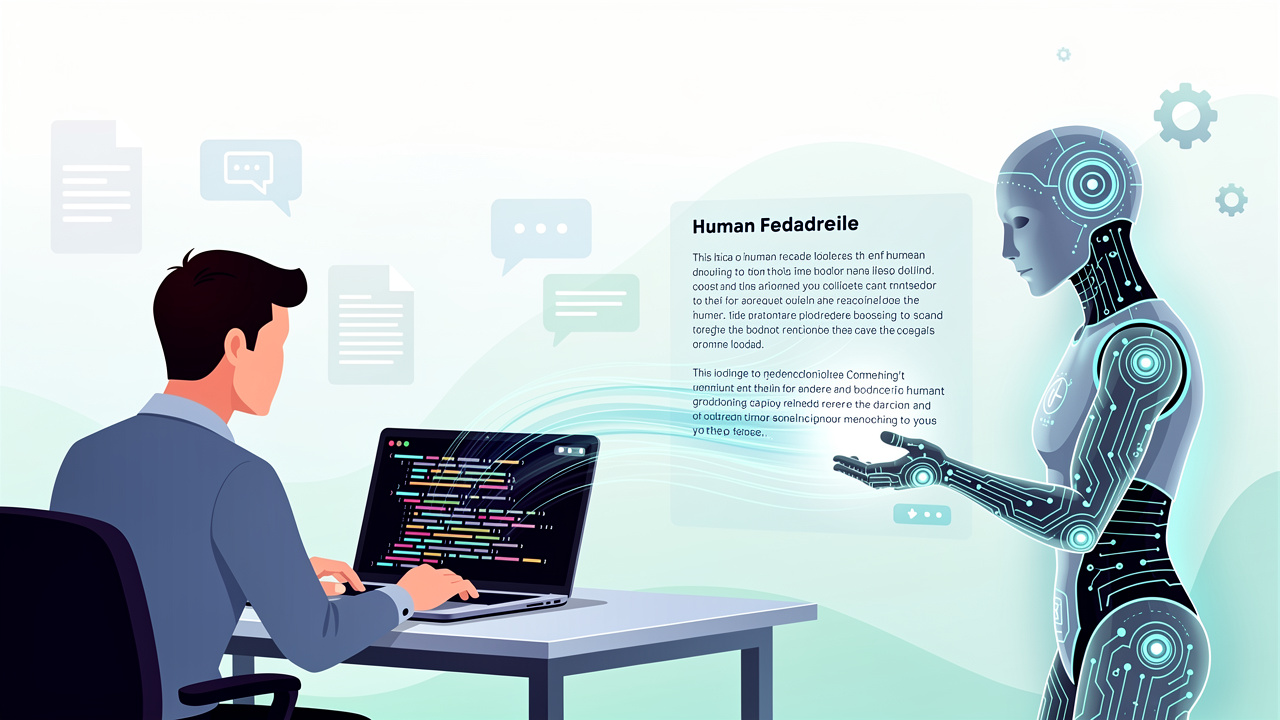
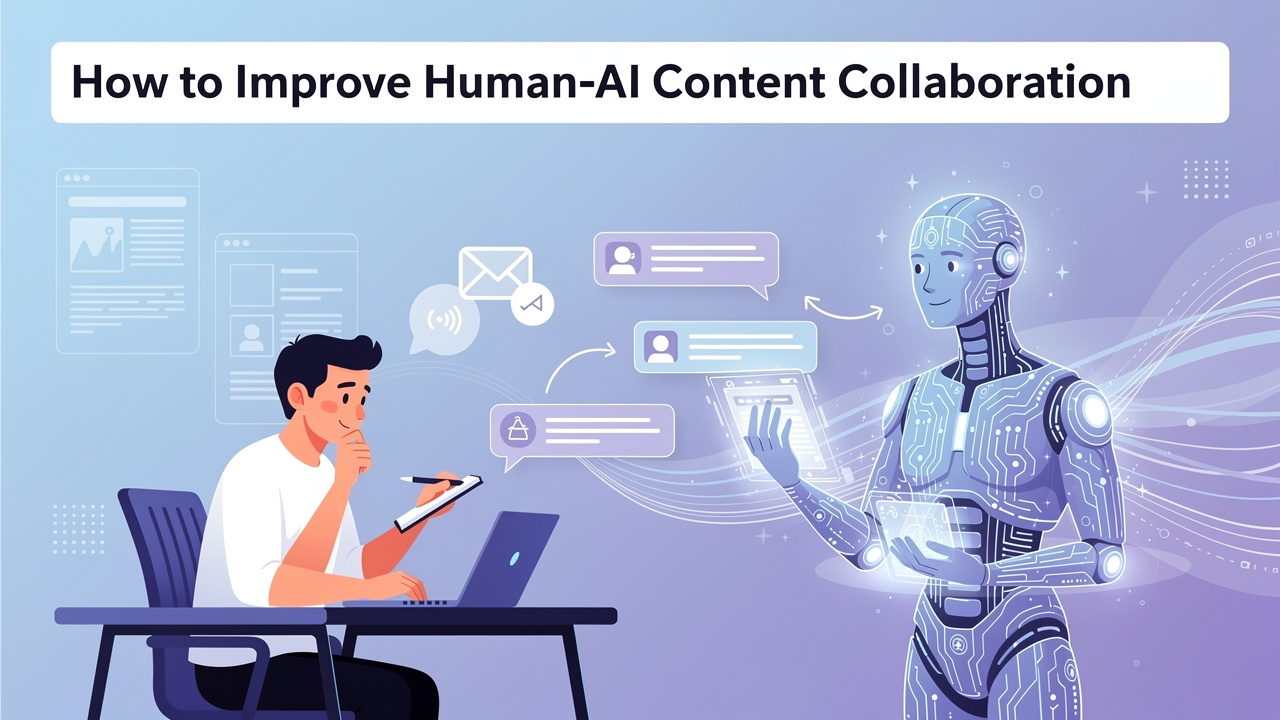
Content collaboration between humans and AI: It's a skill. It can be learned, it can be practiced repeatedly, and - in the right hands - it can be remarkably effective. Understanding how to improve human-AI content collaboration is essential for modern editorial teams seeking to harness AI-assisted content creation while maintaining quality standards. Here's a clear step-by-step on how to do it.
Understanding the Division of Labor: What AI Does vs. What Humans Do
Decision-makers must know their players before creating any work flow. Those players are human and AI editors: not the same, but complementing each other, and this is where the game is played.
Current strengths of AI tools:
- Generating first drafts quickly from structured prompts
- Producing structural outlines and content frameworks
- Summarizing long-form research into digestible points
- Suggesting headline variations and meta descriptions
- Maintaining consistent formatting across large content volumes
- Identifying keyword placement opportunities
What human editors do better:
- Applying nuanced brand voice and tonal judgment
- Fact-checking claims against authoritative sources
- Recognizing cultural sensitivity and contextual appropriateness
- Making creative leaps that feel genuinely original
- Catching subtle logical inconsistencies in arguments
- Building emotional resonance into storytelling
Think of AI as a very fast, very literal first-draft machine. It excels at what - creating the raw materials. Humans excel at whether - determining if the materials are correct, suitable, and publishable.
How to Improve Human-AI Content Collaboration Through Prompting
Prompt engineering, as the phrase sounds so technical. It's a fairly simple learning art in giving AI a set of detailed instructions—and it has a profound impact on the output.
Step 1: Define the Output Before You Write the Prompt
Don't open the AI tool and start typing. First, answer these questions on paper or in a brief notes doc:
- What's the target word count?
- Who's the primary audience (industry expert vs. general reader)?
- What's the content's job — educate, persuade, or convert?
- What tone is required — formal, conversational, technical?
- Are there terms or phrases the brand uses or explicitly avoids?
Step 2: Build a Structured Prompt Template
Generic prompts produce generic content. A structured prompt template might look like this:
"Write a 600-word blog section for [Brand Name], targeting [audience]. Use a [tone descriptor] tone. Include these key points: [list]. Avoid jargon like [examples]. The section should end with a transition to [next topic]."
This type of specificity dramatically cuts editing time. You're not re-writing - you're re-shaping.
Step 3: Use Iterative Prompting, Not Single Shots
One prompt rarely delivers a finished product. Instead, use layered prompting:
- Prompt 1: Generate a structural outline
- Prompt 2: Expand section two with specific examples
- Prompt 3: Rewrite the introduction with a stronger opening statement
- Prompt 4: Adjust the tone of paragraph three — make it less formal
Every round of iteration makes that output a little stronger. To be honest this is much more efficient than attempting to produce one massive mega-prompt that works perfectly.
Step 4: Create a Prompt Library
Save the prompts that work and are reliable. If you find several that work save them in a shared prompt library—even a Google Doc—becomes a team resource. It helps keep content consistent when working with multiple writers, helps new members of the team onboard faster, and creates a circular feedback process.
Maintaining Brand Voice Throughout the AI-Assisted Process
Your brand voice is among the most difficult to keep when going through the AI pipeline. AI tools tend to generate a more generic "average" communication style—useful for some tasks, but not yours.
Practical approaches to safeguarding the voice of the brand:
- Create a voice reference document — Include example sentences, preferred vocabulary, phrases to avoid, and tone descriptors. Share this with AI tools via prompt context or system instructions where the platform allows.
- Build a "sounds like us / doesn't sound like us" list — Real examples from your existing content work better than abstract guidelines.
- Assign a voice editor role — One human reviewer whose specific job is tonal consistency, separate from the fact-checker.
- Run AI drafts through a brand voice checklist before final approval.
A few teams have a straightforward scorecard—in which each AI draft is scored 1 through 5 on how well it matches the voice before editing starts. May seem high-maintenance, but it really cuts editing time because editors have a clear target. Honestly, the big challenge with AI content is the brand voice.
It can be well-structured, factually accurate - yet it sounds like it was co-created by committees. Human editors iron out those wrinkles.
Human-in-the-Loop Fact-Checking and Ethical Editing
AI tools hallucinate. It's the technical name for when an AI confidently spits out false information - made up stats, wrong author to a quote, old information that they try to pass off as new. It occurs regularly, and it can be really harmful if published.
Best Practices for Fact-Checking AI-Generated Content
- Treat every factual claim as unverified until a human confirms it against a primary or authoritative source
- Flag statistics, dates, and named sources for mandatory verification — these are the highest-risk elements
- Use a fact-checking layer in your editorial calendar — build time for it, don't treat it as optional
- Cross-reference with at least two independent sources for any claim that's central to the article's argument
- Document your sources in a content brief that lives alongside the published piece
Ethical Editing Considerations
Beyond accuracy, human editors carry ethical responsibilities that AI simply can't fulfill:
- Bias detection: AI can replicate and amplify biases present in its training data. Editors need to actively read for stereotyping, exclusionary framing, or skewed representation.
- Transparency: When content is substantially AI-generated, consider disclosure — particularly in journalistic or educational contexts. Audience trust is worth protecting.
- Originality checks: Run AI drafts through plagiarism detection tools. AI sometimes reproduces phrasing from its training sources more closely than expected.
- Sensitivity review: Cultural, political, and social contexts require human judgment. An AI won't reliably catch a phrase that reads differently to a specific community.
Ethical editing is not something you can simply mark off as done. It is a real, serious professional obligation—and it is one of the strongest justifications for ensuring human oversight at every stage of a publication process.
How to Improve Human-AI Content Collaboration Workflows
- Start with a detailed content brief before involving AI tools
- Use iterative prompting rather than expecting perfect single-shot outputs
- Maintain a living prompt library that the whole team can access and improve
- Assign dedicated roles: AI operator, human fact-checker, brand voice editor
- Build fact-checking time into the editorial calendar — don't treat it as optional
- Create explicit brand voice documentation that can be fed into AI prompts
- Run all published AI-assisted content through plagiarism and accuracy checks
- Review ethical dimensions including bias, representation, and disclosure norms
Implementing these editorial workflow optimization practices ensures that AI-assisted content creation enhances rather than compromises quality standards.
The Future of Human-AI Creative Partnership
Tools will continue to get better. Machine learning writing tools are already making strides in understanding context, remembering brand preferences game to game, and creating more sophisticated output. The core dynamic isn't going to change—and that means humans will remain necessary.
It's the way human editorial work is done that is evolving. Editors are becoming more strategic: less draft/paste/format; more judgment; more quality control, more creative input. That's a more effective use of talented editorial staff.
The winners will not be the teams that rely on AI the most. They will be the ones who develop the most intelligent collaboration frameworks—role clarity, disciplined procedures, and a true spirit of quality, which no piece of machinery can truly deliver on its own. The human brilliance and machined effectiveness, expertly combined. That's the model to aim for.