Artificial intelligence has revolutionized content creation—so much so that a new category of tools has emerged that have been built specifically to make AI-generated content appear as natural and human-like as possible. These programs—generally referred to as AI humanizers—have evolved and improved dramatically, with a few now reportedly able to "fool" nearly all of the most popular AI detection programs. The best AI humanizer that passes all detectors represents a significant advancement in AI content generation tools.
But here's why it's relevant—whether you're a marketer, student, journalist or business owner—anyone living through the modern content creation revolution.
What Is an AI Humanizer?
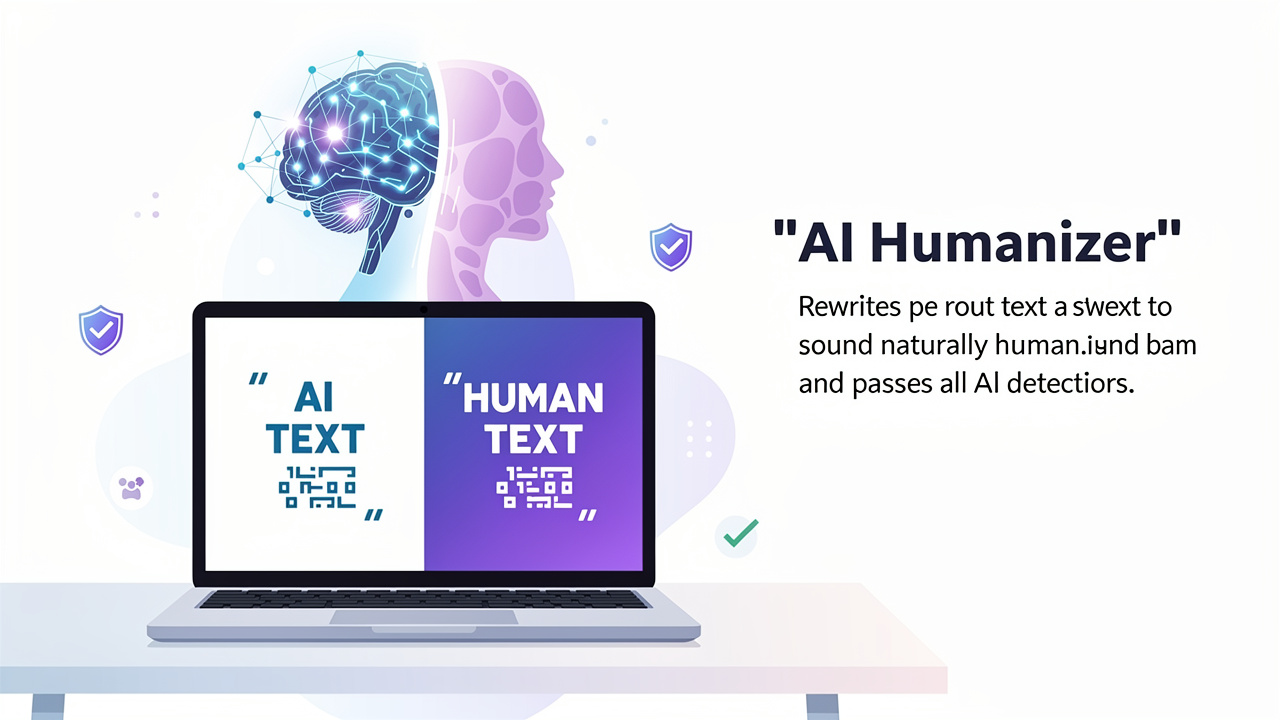
AI humanizer is an application that takes text produced by large language models (ChatGPT, Claude, Gemini, etc.) and transforms or recomposes it so it appears human authored. This isn't for aesthetic reasons. It's to remove the patterns detected by AI detectors: repetitive syntax, unnaturally formal language, machine-like uniformity of tone and word selection, etc.
Just look at it like this. Everything that AI has produced is identifiable in some way. Humanizers attempt to wipe away that identifying feature, but not at the cost of flattening the original content and meaning.
How AI Humanizers Work
Most humanizers operate through a combination of techniques:
- Paraphrasing and synonym substitution — replacing predictable word choices with less expected alternatives
- Sentence restructuring — breaking long, uniform sentences into varied lengths, adding fragments, contractions, or informal connectors
- Tone modulation — injecting subtle emotional variation, casual phrases, or self-corrections that mimic natural human writing habits
- Perplexity and burstiness adjustment — these are actual linguistic metrics. High perplexity means unpredictable word choices; high burstiness means dramatic variation in sentence length. Human writers score high on both; AI tends to score low
- Contextual rewriting — more advanced tools don't just swap words; they actually understand context and rewrite entire passages with new structural logic
Some tools employ fine-tuned language models that have been pre-trained on human-textes database to generate output that resembles human-written text. Some employ rule-based systems along with machine learning algorithms. The most effective use a combination of the two.
Applications Across Industries
AI humanizers aren't just for students trying to dodge Turnitin. Their real-world applications stretch across multiple professional sectors:
- Marketing and SEO: Content agencies use humanizers to scale blog production without triggering Google's AI content penalties
- Publishing and journalism: Some editorial teams use AI drafts as starting points, then humanize the output before final editing
- E-learning and education: Course creators humanize AI-generated lesson scripts to sound more engaging and conversational
- Legal and compliance writing: Firms use AI to draft boilerplate, then humanize it to match firm-specific voice and style
- Customer support: Chatbot responses get humanized to reduce the robotic feel that frustrates users
In the pharmaceutical industry, in a promising development, humanizers have been employed to create patient-focused educational content, as "the clinical AI writing style often comes across as impersonal and overly technical, creating a barrier with the very audience it is supposed to serve.
Advantages of Using AI Humanizers
Here's what makes these tools genuinely useful:
- Speed without sacrificing quality — you get the efficiency of AI with output that actually reads well
- Consistency at scale — humanized content maintains a brand voice across hundreds of pieces without manual editing for every single one
- Reduced detection risk — for industries where AI-flagged content creates legal or reputational problems, humanizers provide a buffer
- Cost efficiency — a human editor reviewing humanized AI content costs far less than a human writer producing everything from scratch
- Accessibility — non-native English speakers can use AI drafts and humanizers together to produce polished, natural-sounding content
The Detection Challenge
The thing is - its not as easy as it sounds to get around these AI detectors. They are always updating and refining their models, its like an arms race. (GPTZero, Originality.ai, Copyleaks, Turnitin's AI detection service etc.)
Almost all humanizers do significantly lower detection scores. But that claim of "passing all detectors" is one to be skeptical about. Detection algorithms evolve; what works to fool them now may not in the future. In addition, some now look at the semantics of what is written rather than purely at the statistical features, so simple paraphrasing may not work.
The most successful humanizers are usually a mixture of structural reformulation, and genuine contextual variation, not just simple thesaurus substitution. However, the best humanizers still have their failures on the most sophisticated of detection systems - particularly when AI generated content is extremely lengthy, or spam thick.
Best AI Humanizer That Passes All Detectors
| Feature | AI Humanizer | Traditional AI Writer | Human Writer |
|---|---|---|---|
| Speed | Very fast | Very fast | Slow |
| Detection risk | Low (when good) | High | None |
| Cost | Low-medium | Low | High |
| Creativity | Moderate | Low | High |
| Voice consistency | High | Medium | Variable |
| Contextual nuance | Medium | Low | Very high |
AI writers used to be crap - AI, that is. However, even the worst AI writers like the first versions of Jasper or Copy.ai can crank out copy at lightning speed. However, much of that copy reads - well, like AI.
Humanizer injects a touch that diminishes much of that difference. However, it still can not match the lived experience, unique opinion or authentic creative instinct of a talented human author. That is a fact.
Ethical Considerations
Where it begins to get a bit more difficult is when you start using an AI humanizer to make content more readable. This is perfectly justifiable. However, if you start using it to deceive university institutions, fake authorship in journalism, or to skew search engines on a mass scale, things are more complex.
Several actual examples have emerged. In 2023, a group of university students were identified (and some expelled) for using AI to produce humanized essays that persisted with certain identifiable patterns, after they submitted them. At the same time, a large content farm was discovered to have distributed thousands of humanized AI articles purportedly authored by fake human "authors"—lessening confidence in online publication on the whole.
The fundamental ethical dilemma is this: transparency. Using AI for then is not necessarily immoral. Failing to be transparent about it, in situations where it is important to be, is.
Publishers, teachers and sites are more and more demanding disclosures. And maybe that's the way to go - not banning AI writing, but forcing the people to tell the truth about it.
How to Choose the Right AI Humanizer
Not every tool is equal. When evaluating options, consider:
- Detection bypass rate — test the tool against multiple detectors before committing
- Output readability — humanized text that sounds awkward defeats the purpose
- Customization options — can you set tone, formality level, or target audience?
- Speed and API access — for large-scale operations, integration matters
- Pricing model — per-word, subscription, or credit-based; choose what fits your volume
- Plagiarism safety — some humanizers inadvertently produce content that matches existing sources; check for this
Tools such as Undetectable.ai, HIX Bypass, and StealthWriter are among the top mentions but performance will vary depending upon the application and detectors you are targeting. Test you own to your own content type.
The Future of AI in Content Generation
AI humanizers are, in a way, a bridge technology. As AI writing models advance, their outputs will increasingly resemble human work, so in time the difference will be less important than how well the AI writing models work.
Detection tools will continue to develop. Humanizers will continually evolve. However, the larger change I expect to see will be to around attribution and verification rather than detection. Work is already underway on blockchain-based content provenance, watermarking at the model layer, and industry-wide disclosure standards.
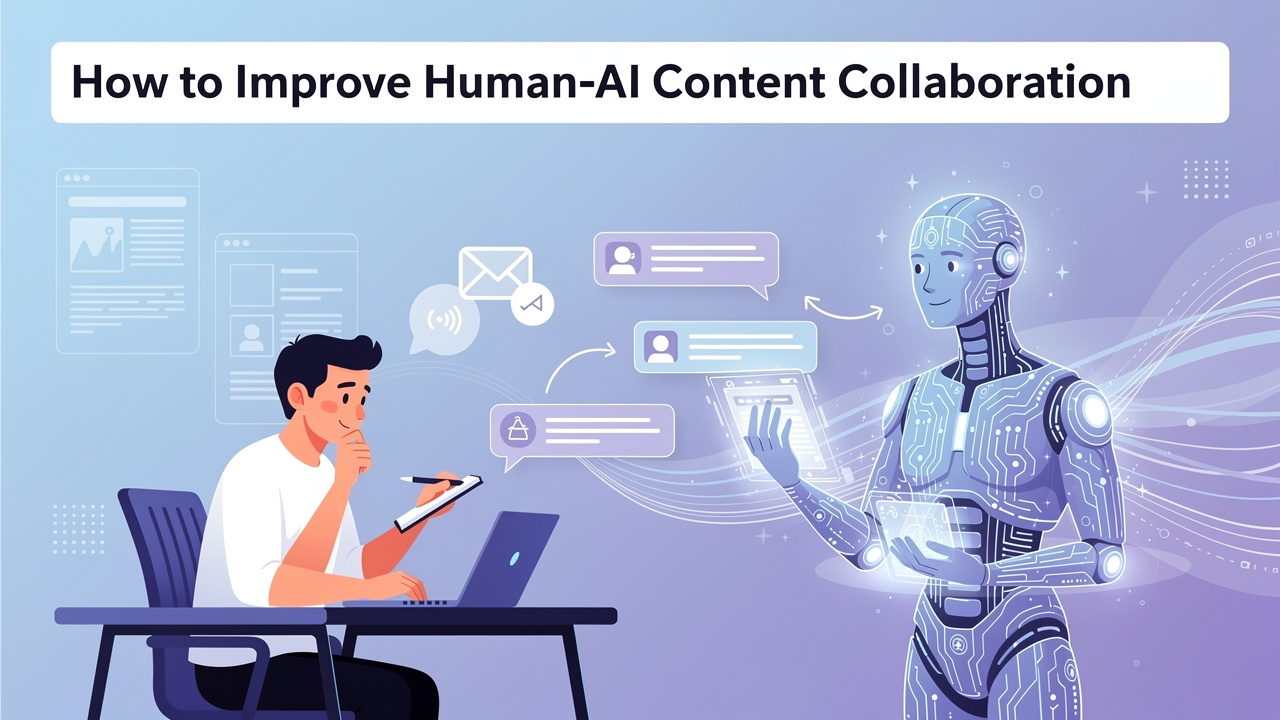
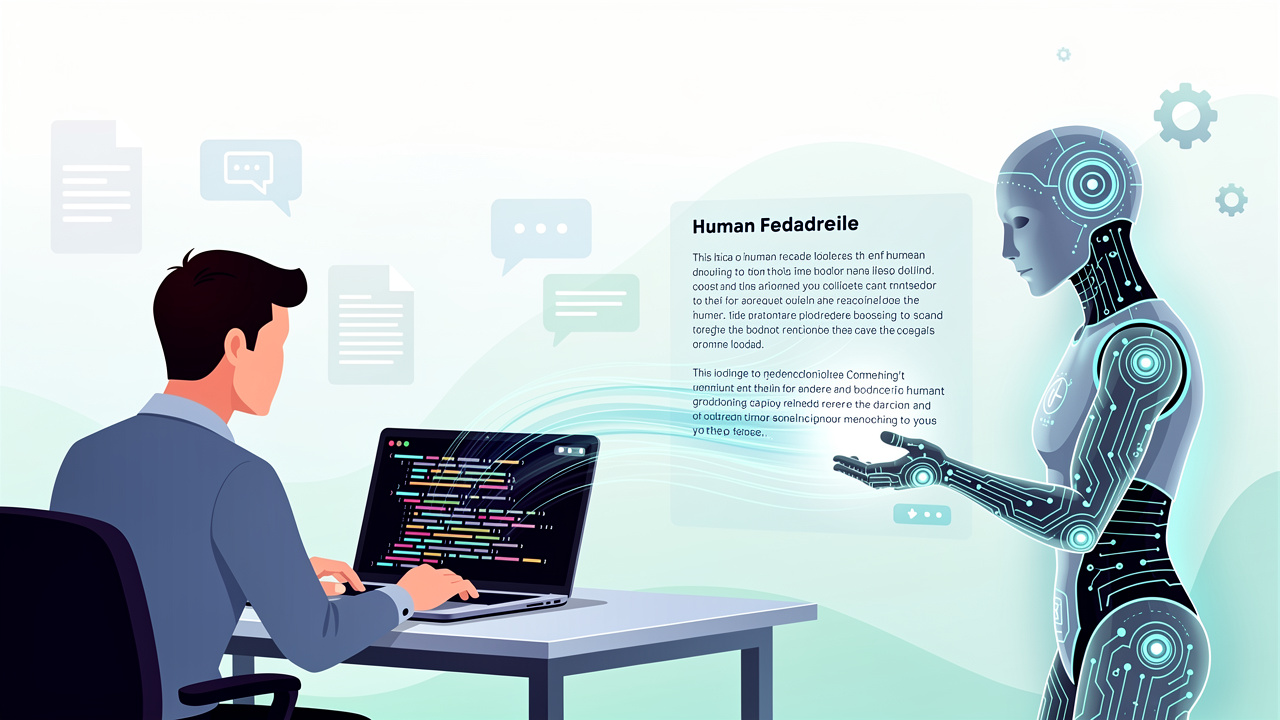
Let's be clear. The future isn't AI vs human. It is AI with human—AI tools that handle volume and efficiency and human minds that define nuance, ethics and originality. AI humanizers are just one segment of a larger puzzle, and understanding it well is that if you use it responsibly.
Conclusion
AI humanizers that can beat detection tools are a tangible and expanding category of technology that has functional and beneficial use in dozens of industries. They imitate the patterns of human writing by replicate the statistics (sentence length, variability, anomalies, framing) as well as the structure (diversity, general unpredictability, shifts in tone) that make a piece of content human, and are very useful when used ethically and with integrity. The issues with detection are genuine and can compromise the entire project of text generation, but there's no sacred 'perfect' option here.
To make a humanizer work on your project you will need to trial it, use it judiciously and keep transparency about how and why you're using it. As the world of online content creation develops this is unlikely to be the key skill, it will be how to use AI in a human way without losing sight of your core human audience and users.