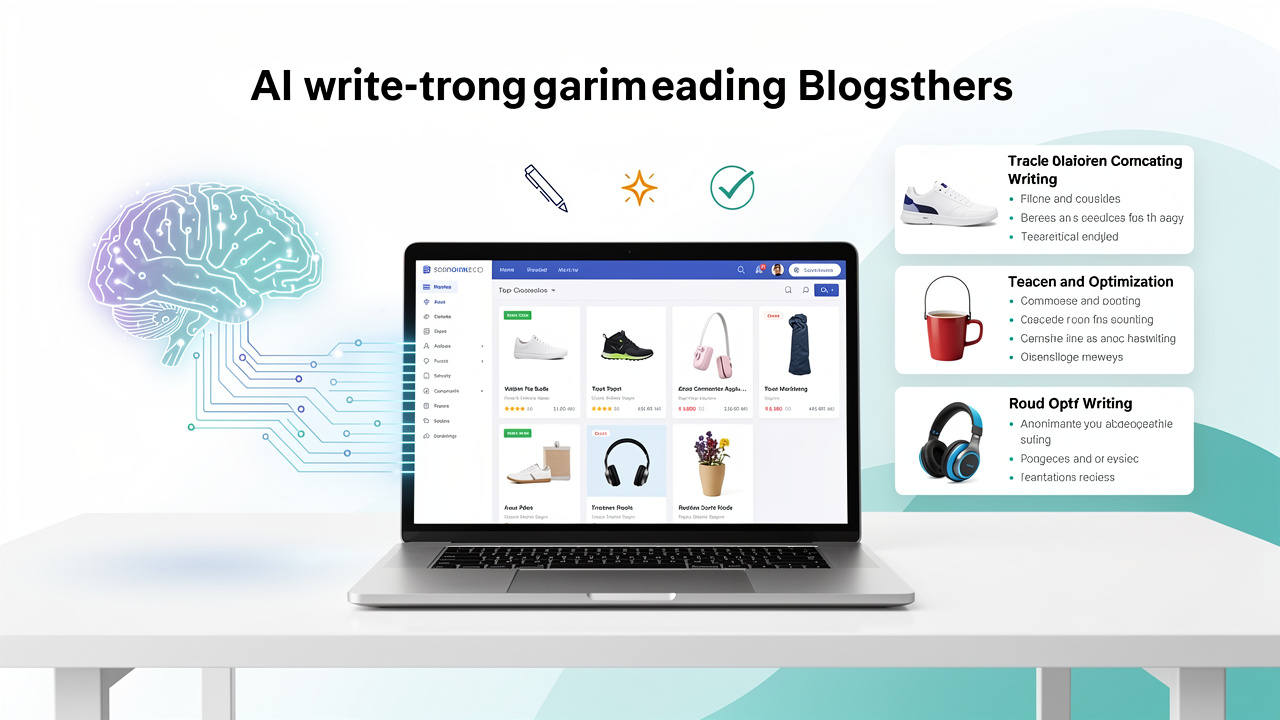
Artificial Intelligence (AI) has revolutionized everything bloggers do. Learning how to use AI to write blog posts that rank effectively can transform your content strategy. What used to require hours of research, writing and editing can now be completed within minutes and, with a few adjustments, outperform a traditionally-produced post in search engine results. However, this is a step-by-step instruction of how to use AI for your blog instead of fighting against it.
Benefits of Using AI Content Writing Tools
The advantages are real, and they're substantial. Here's what bloggers are actually gaining:
- Speed without sacrificing depth. AI can generate a 1,500-word draft in under two minutes. That's not a replacement for human thinking, but it's a powerful starting point.
- Consistent output volume. Ranking on Google often requires publishing regularly — sometimes 3-5 posts per week. AI makes that pace sustainable for solo bloggers and small teams.
- Research acceleration. Tools like ChatGPT or Perplexity can summarize complex topics quickly, pulling together information that would otherwise take hours to compile.
- Overcoming writer's block. Sometimes the hardest part is starting. AI handles that blank-page problem instantly.
- Cost efficiency. Hiring freelance writers costs money — often $100–$500 per article. AI content writing tools run $20–$50 per month for unlimited use.
- Headline and structure ideation. AI excels at generating multiple headline variations, outline structures, and angle ideas you might not have considered.
Of course, the productivity benefits are truly astonishing. That said, AI produce still require a human aspect - more on that in a moment.
AI Tools Available for Bloggers
Different tools serve different purposes. Here's a practical breakdown:
| Tool | Best For | Price Range |
|---|---|---|
| ChatGPT (GPT-4) | Long-form drafts, research, outlining | Free / $20/mo |
| Claude (Anthropic) | Nuanced writing, longer context windows | Free / $20/mo |
| Jasper AI | Marketing-focused blog content | From $49/mo |
| Surfer SEO + AI | SEO-optimized drafts with keyword data | From $89/mo |
| Perplexity AI | Research with cited sources | Free / $20/mo |
| Frase.io | SEO briefs and content optimization | From $15/mo |
| Copy.ai | Short-form content, intros, CTAs | Free / $49/mo |
All tools have their own strengths. For example, SurferSEO doesn't just write; it examines pages that rank well and provides you with the keywords and topics you should include. That synergy of AI writing and SEO intelligence is quite powerful.
How to Use AI to Write Blog Posts That Rank
Step 1: Start With Keyword Research (Don't Skip This)
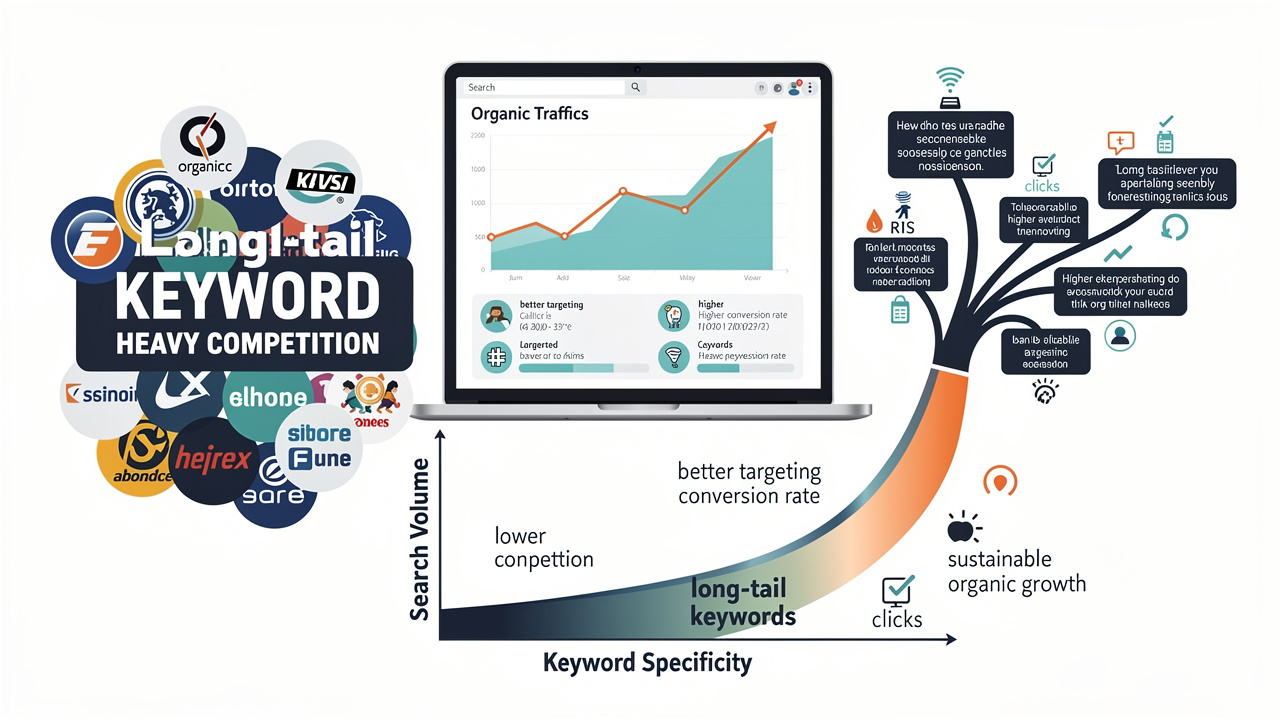
Choose your target keyword before ever launching any AI tool. Use Ahrefs, SEMrush, or Google free tools to find a keyword that has enough search volume and attainable competition. AI cannot make this decision for you, it is a strategic choice.
Step 2: Build a Detailed Prompt
Generic prompts produce generic content. Instead of typing "write a blog post about email marketing," try something like:
"Create a blog article of approximately 1,800 words centered around the keyword'email marketing for small business'. Have an H2 section about list segmentation, one about automation sequences and one about optimizing the subject line. Write in a conversational yet authoritative voice. Use specific examples."
The more specific your prompt, the better your output. This one simple step is what distinguishes bloggers who produce awesome AI content from those who produce crap.
Step 3: Generate and Critically Evaluate the Draft
Read the AI output carefully. Mark sections that are:
- Too vague or generic
- Factually questionable (AI hallucinates — verify statistics)
- Missing your personal experience or brand voice
- Repetitive or padded
Step 4: Add Human Expertise and Unique Insights
This is the most crucial step. Insert personal stories, stats, expert quotes, your own opinions. Only you can provide this.
Google's helpful content system favors first-hand experience and expertise. Nothing AI can do about that.
Step 5: Edit for Voice and Flow
Read it aloud. Correct any phrasing that seems stiff, too formal, or might come out sounding robotic. Ensure there are a mix of sentence structures and lengths.
Add a few transition words. Remember that this is expected to be created by a person—after all, that's what it's supposed to be.
Step 6: Add Visuals, Internal Links, and Formatting
AI produces the content. You take care of anything else: images, graphs, tables, internal linking to other articles, correct header hierarchy (H1, H2, H3) and meta description.
SEO Best Practices for AI-Generated Content
The issue is, AI doesn't necessarily create the SEO optimized copy and you need to plan that in.
- Use your target keyword in the H1, first 100 words, and at least one H2. Don't stuff it, but don't be shy either.
- Add semantic keywords. Tools like Surfer SEO or Frase show you related terms that top-ranking pages use. Weave these in naturally.
- Optimize for featured snippets. Include a concise answer (40-60 words) directly after a question-formatted H2. AI drafts often miss this opportunity.
- Check content length against competitors. If the top three ranking posts average 2,200 words, don't publish 800 words. AI can easily expand a draft — just ask it to elaborate on specific sections.
- Write a compelling meta description manually. AI-generated meta descriptions tend to be generic. Write yours specifically to drive clicks.
- Internal linking matters. Add 3-5 links to related posts on your site. AI won't know your content library.
- Update AI content regularly. Search engines favor fresh, updated content. Revisit AI-generated posts every 6-12 months and add new information.
Real-Life Examples of Successful AI-Generated Blogs
Several well-known publishers have been transparent about their AI content experiments:
CNET published AI-y related cost explainers starting in 2023. Following a controversy about mistakes that bolstered the case for human editing, they streamlined their process and persisted with AI with some constrains on editorial supervision.
HubSpot employs AI tools to help content team generate outlines, drafts, and collate research. They dominate the search rankings for thousands of competitive marketing keywords from leveraging AI paired with great human expertise.
** Bankrate and NerdWallet2 have automated some evergreen financial content areas via AI-assisted processes, which are always overseen by human experts prior to publication.
The consistency observed in the successful examples can be summed up as: AI takes care of volume and fast paced; Humans take care of accuracy, voice and strategic sophistication.
Potential Pitfalls to Avoid
These mistakes are common, and they'll hurt your rankings or reputation:
- Publishing without editing. Raw AI output is almost never publish-ready. Always revise.
- Trusting AI statistics without verification. AI confidently cites fake statistics. Always check numbers against original sources.
- Ignoring E-E-A-T signals. Google's quality guidelines emphasize Experience, Expertise, Authoritativeness, and Trustworthiness. Pure AI content lacks the first two. Add author bios, credentials, and personal experience.
- Over-optimizing with keywords. AI sometimes repeats keywords unnaturally when prompted to include them. Read for flow and remove awkward repetition.
- Creating thin content. AI can pad word count with filler. Every paragraph should add real value — cut anything that doesn't.
- Neglecting originality. If your AI-generated post covers the exact same points as the top-ranking articles, you won't outrank them. Add a unique angle, original data, or a contrarian perspective.
- Skipping the human experience layer. This is probably the biggest mistake. A post about "the best hiking boots for beginners" needs someone who's actually hiked to make it trustworthy and useful.
Key Takeaways
- AI dramatically accelerates content creation but requires strategic human oversight to produce ranking-worthy posts.
- The best AI tools for bloggers include ChatGPT, Claude, Surfer SEO, and Perplexity — each serving different purposes.
- A detailed, specific prompt is the foundation of quality AI output; vague prompts produce vague content.
- Human expertise, personal experience, and original insights are non-negotiable additions to any AI draft.
- SEO optimization must be built in deliberately — AI doesn't automatically produce search-friendly content.
- Successful publishers like HubSpot and CNET use AI as an assistant, not a replacement for editorial judgment.
- Common pitfalls — fake statistics, thin content, missing E-E-A-T signals — are avoidable with a consistent editing process.
Conclusion
AI is one of the strongest weapons in a blogger's arsenal right now. When used effectively it compresses timelines, removes friction from creativity and helps to make regular publishing actually possible. When mis-used it