Moving from just a handful of pages to tens of thousands of pages - without compromising on quality or relevance - was historically a mammoth undertaking that would involve massive teams and even bigger budgets.
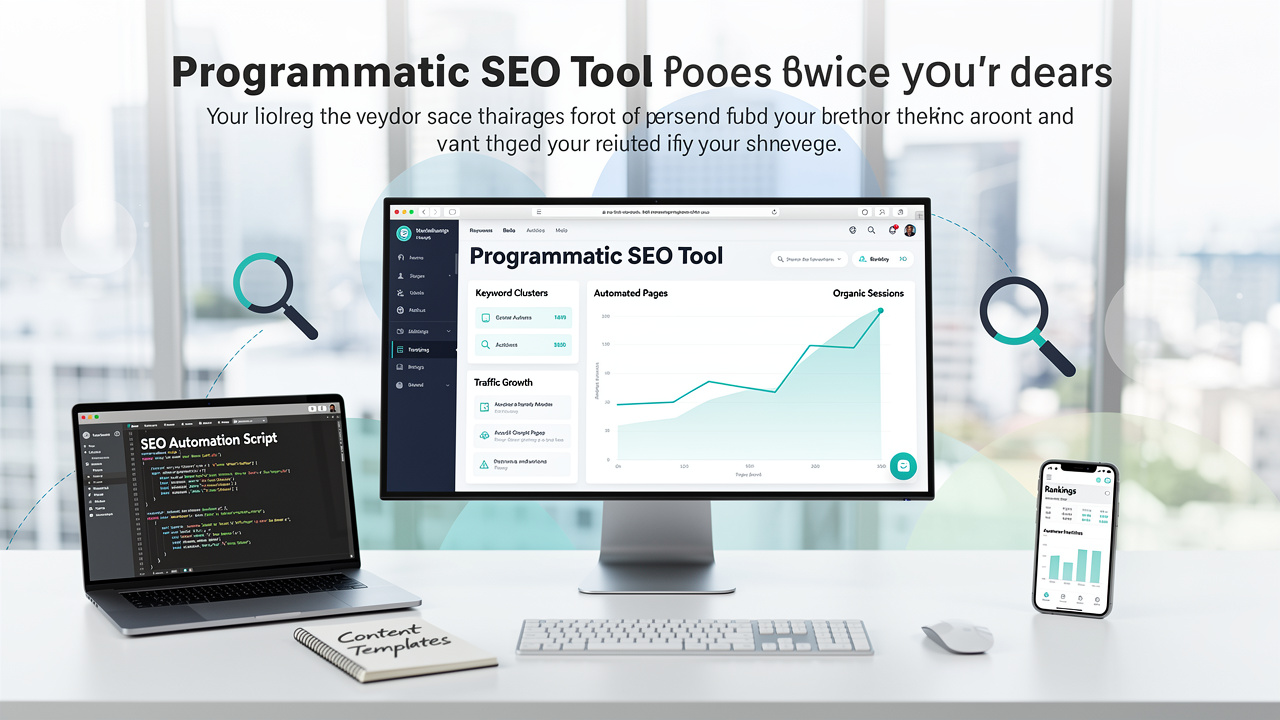
That's where programmatic SEO came in and changed everything. A quality programmatic seo tool has transformed how businesses approach content creation at scale, making automated SEO solutions accessible to companies of all sizes.
Thanks to a growing number of specialist tools, it's now an option available to nearly all businesses of all sizes.
This guide explains what programmatic SEO is, how the tools work, their benefits, and the best practices to implement so you avoid common pitfalls for beginners.
What is Programmatic SEO?
Programmatic SEO is the art of creating mass quantities of optimized pages at scale, leveraging data, templates, and automation rather than individually crafting each page.
Essentially, the idea is to pinpoint patterns in people's search behaviors, create templates that fulfill these search queries, and then populate those templates with unique and valuable data thousands of times.
Look at Tripadvisor.
They don't sit down and painstakingly write pages for every restaurant in the world.
They've built a system where structure data about each restaurant (name, location, reviews, category) auto-generates pages that appear in searches like "Best Italian food in Austin" and "Top restaurants in Chicago,". Each one is both useful for people and directly matches a real search query - millions of pages, all driven by data and templates.
Why Traditional SEO Reaches Its Limit
Programmatic SEO was designed to solve problems for traditionally managed sites. While traditional approaches work for smaller sites, you hit a barrier quickly:
- Manual content creation is time-consuming. A prolific writer will struggle to produce more than 3-5 quality pieces of content per week. If it takes you years to write that many, creating 10,000 pages will take lifetimes.
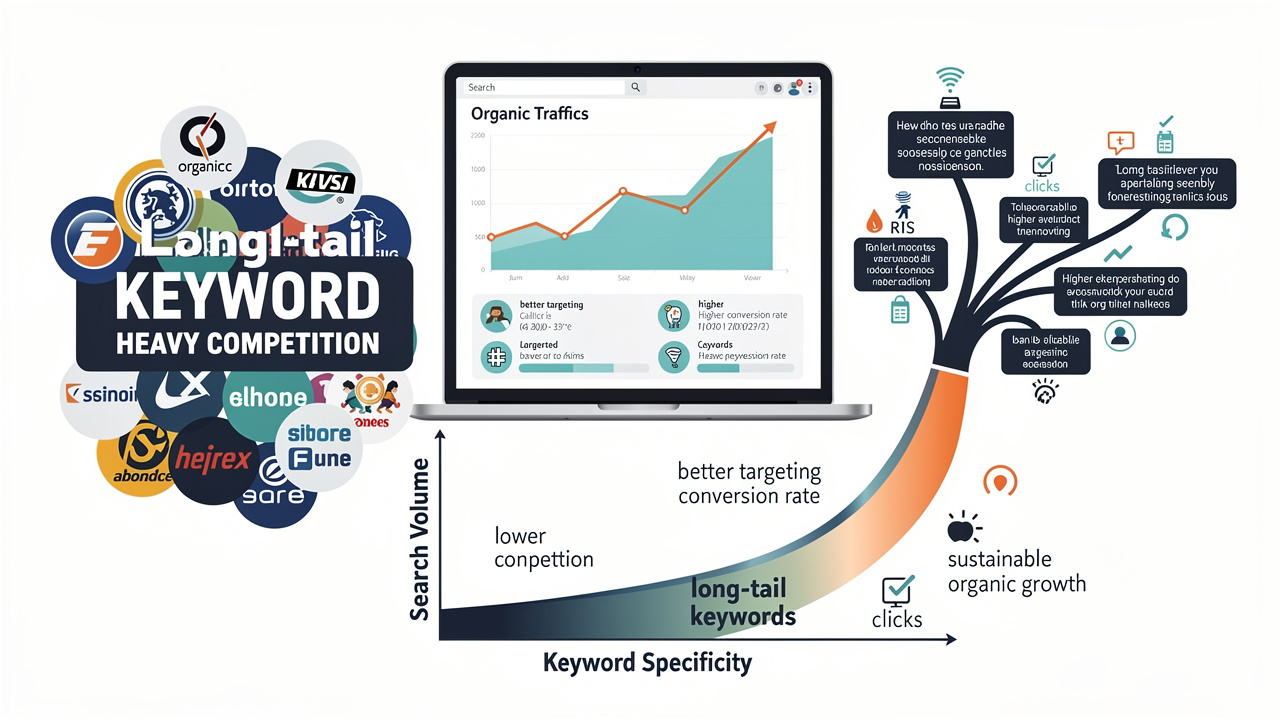
- Limited keyword reach. Traditional methods typically target a few major keywords and often ignore the "long tail," which accounts for a substantial portion of conversions.
- Inconsistent quality. When multiple writers are involved, the quality, tone, and structure of your pages can vary drastically, impacting both users and ranking.
- Prohibitively expensive scaling. Agencies charge upwards of $100 to $500 per article, making scalable content production through manual means unaffordable for most businesses.
As Ahrefs states, a stunning 96.55% of all webpages get no traffic from search engines, much due to lack of relevance and search intent targeting that programmatic can overcome.
How Does a Programmatic SEO Tool Work?
In a nutshell, the process is:
- Keyword Research & Clustering: identifying groups of related searches that fit a shared template.
- Data Aggregation: retrieving organized information from databases, APIs, spreadsheets, or scraped data.
- Template Creation: designing a page template to display that data dynamically.
- Automated Publishing: using the tool to produce and publish your new pages on a website CMS.
- Performance Tracking: monitoring which pages are successful and need optimization.
The most advanced tools also assist in automatic linking between pages, creating meta titles, and warning you about potential Thin Content issues before they can impact rankings.
Featured Programmatic SEO Tool Options
There are several excellent options now available, including:
Webflow + Airtable (Build-it-Yourself stack)
For those with technical expertise, the powerful combination of Webflow's CMS and Airtable as a database provides immense flexibility at a relatively low cost.
Byword
Byword is designed specifically for programmatic content creation. You supply a CSV of keywords/data, and the tool generates seo-optimized content in bulk - perfect for saas companies and affiliates aiming to create numerous pages quickly.
SEO.ai
This tool combines AI writing with ranking signals, enabling teams to generate large amounts of content optimized for search. It taps into live SERP data to inform content structure.
Programmatic SEO functionality in Semrush and Ahrefs
Though the primary focus of these platforms is research, their keyword clustering tools are crucial planning tools for programmatic SEO. Semrush's Keyword Magic Tool, for example, helps you discover thousands of related searches categorized by their intent - the bedrock of any programmatic strategy.
Screaming Frog
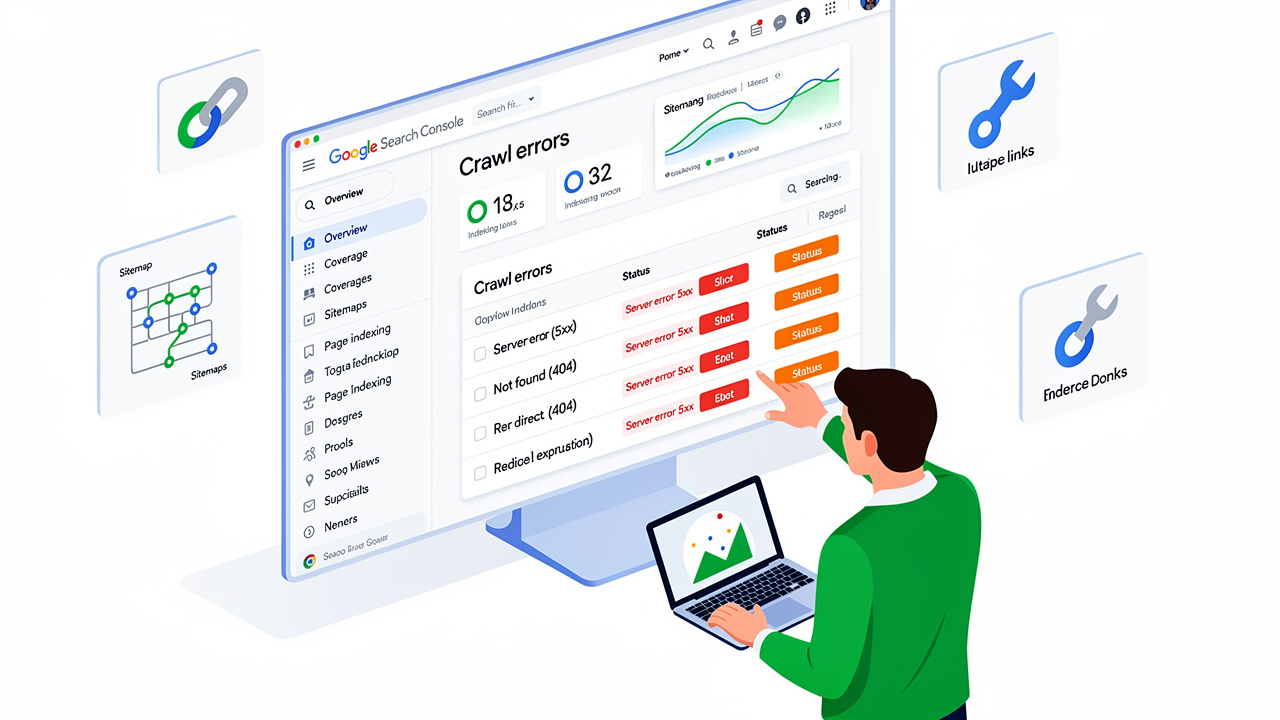
Although not a "creation" tool, Screaming Frog is invaluable for analyzing programmatic sites and identifying technical errors, broken links, duplicate content, and indexing issues at a massive scale.
Kadoa and Browse AI
Tools like Kadoa and Browse AI are excellent for web scraping-extracting organized data from external websites to feed into your templates.
Real-world Programmatic SEO Case Studies
The results speak for themselves when done right:
Zapier's integration pages (e.g., "Connect Gmail to Slack," "Automate HubSpot with Google Sheets") leverage programmatic SEO. They reportedly garner over 4 million monthly organic visitors thanks to tens of thousands of pages that match specific integration search queries.
Nomad List, Pieter Levels' website for digital nomads, uses programmatic for specific data for each city (e.g., living expenses, internet speeds). It attracts hundreds of thousands monthly visitors by a solo operator-all through programmatic.
G2's comparison pages (like "HubSpot vs Salesforce" and "Best CRM for Small Business") directly match how purchasing prospects search, resulting in vast amounts of organic traffic during the buyer journey.
How to Actually Implement Programmatic SEO
Making programmatic SEO effective requires a strategic approach; it's not simply about creating thousands of pages haphazardly. Here's a solid framework:
Step 1: Identify Your Head Term + Modifier Pattern
This can look like '[City] + [Service]' or '[Tool A] vs [Tool B]' or '[Job Title] salary in [Location]'. Your chosen pattern needs enough data to be meaningful and enough search volume across variations to justify building at scale.
Step 2: Validate Demand Before Building
There's no point in building 5,000 pages targeting searches no one performs.
Use Ahrefs or Semrush to determine that your chosen pattern has real search volume distributed across dozens or even hundreds of variations - instead of a few very high volume outliers.
Step 3: Prioritize Data Quality
This is the single most important reason programmatic SEO fails. Think thin, shallow, and repetitive pages - that means avoiding swapping out location names for the same basic text again and again.
Google's algorithms are now excellent at picking up on such low-value programmatic pages and punishing you accordingly with lost rankings.
Step 4: Build Internal Linking into Your Template
All pages within a cluster should link back to each other. Programmatic SEO site-structure needs internal linking for you to efficiently pass link equity to other pages in a cluster, and helps google (and users) understand what is on your site.
Step 5: Monitor, Iterate, and Prune
Before scaling to thousands of pages, create a test batch of 50-100 pages and observe their performance for 60-90 days. You should monitor everything from which pages get indexed and rank to which pages receive clicks and drive conversions. Use the resulting data to iterate on your templates prior to scaling up the page count to thousands. There's no shame in pruning any pages that don't achieve your goals.
The Takeaway
Programmatic SEO tools have made this powerful strategy once solely available to large companies widely accessible for small to medium sized businesses. Today, even a small team can contend for thousands of long-tail search terms previously out of their reach just several years ago through SEO automation tools.
However, regardless of the power of programmatic SEO tools, the key to programmatic success is not the technology itself, but the strategy behind its execution. Genuine user value, site structure, as well as the data you use are still critical. If the above programmatic SEO tactics are followed, you'll be among businesses seeing massive organic traffic in this scalable and extremely potent marketing discipline.