Content production has become highly competitive. Every day, companies are putting out pages, writers are producing enormous volumes of copy, and journalists are working to deadline with formidable speed—all, meanwhile, with a greater demand than ever for newer, more genuine sounding prose. Enter stealth AI writer technology, a class of sophisticated language-generation programs optimized for creating text that has the characteristics of work produced by humans through advanced AI content generation.
This is nothing like your average autocomplete feature. Stealth AI writers are a true step forward in the machine understanding of language, context and tone.
What Exactly Is a Stealth AI Writer?
Essentially, a stealth AI writer is an AI writing tool designed to be adept at creating content that can slip through AI detection software- tools such as Originality.ai, GPTZero and Turnitin- while still being high quality, readable, and relevant. Conventional AI writing tools such as old versions of Jasper or Copy.ai produce something that, while perfectly functional, also has a lot of signals that it is AI writing, such as similar syntactic choices, a very formal tone, or a strange, machine-like rhythm detectable by other AI content detection tools (or discerning humans).
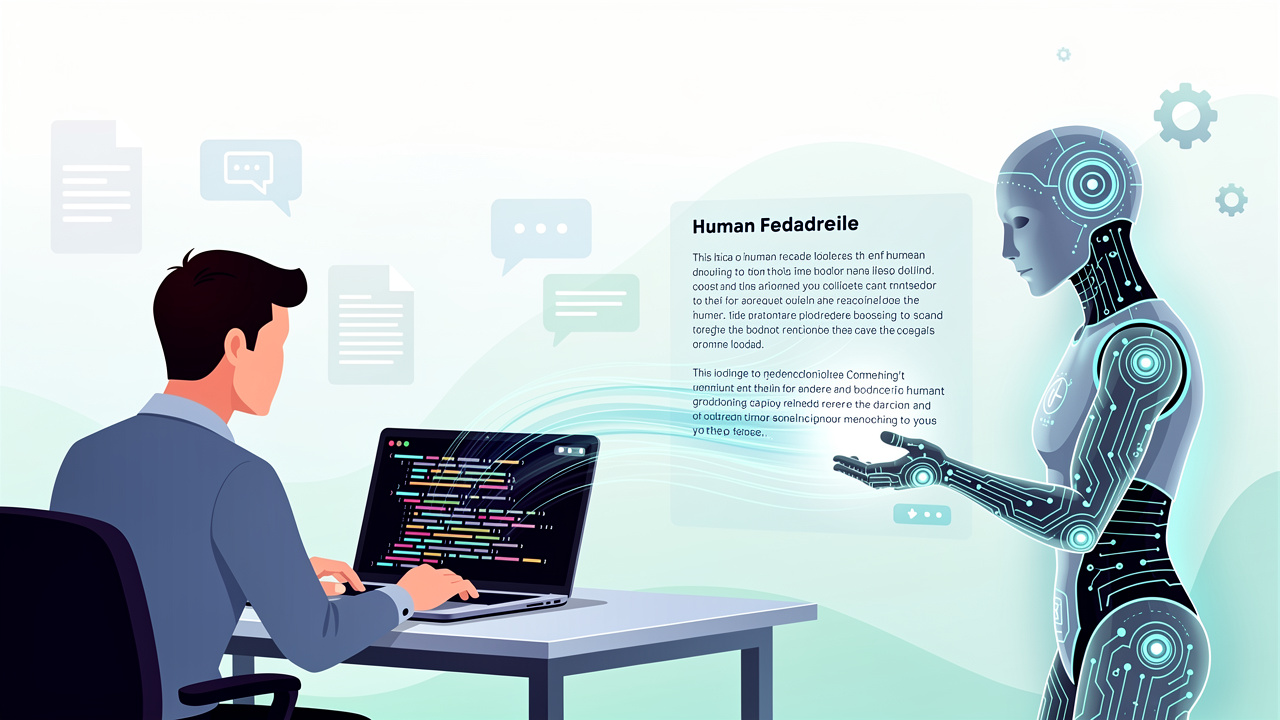
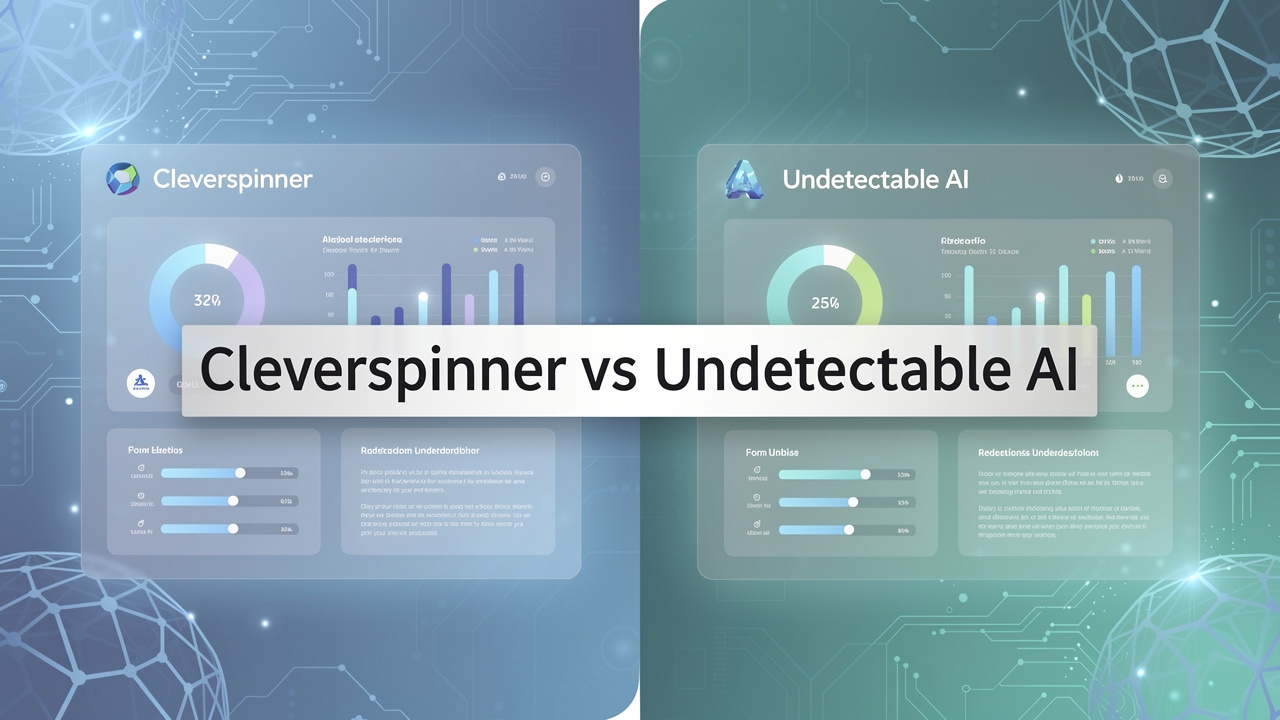
Stealth AI writers deal with this challenge head on. They add on additional humanization layers, contextual variation machines, and advanced paraphrasing systems that simulate human writing in a more convincing fashion. Several tools—such as Undetectable.ai, StealthGPT, and BypassGPT—have even created full product lines in this space.
Here's the thing: you're not trying to fool anyone. You're trying to write something that reads well, because that's what confounds AI detectors in the first place — sentence rhythm and word choice and cohesiveness in context. They are, in the end, what draw the human reader in.
Core Features That Set Stealth AI Writers Apart
Stealth AI writer tools typically offer a distinct feature set compared to conventional automated writing tools:
- Humanization algorithms that restructure syntax, vary sentence length, and introduce natural-sounding imperfections
- Tone customization ranging from academic to conversational, casual to authoritative
- Plagiarism avoidance built into the generation process, not bolted on afterward
- AI detection bypass tested against multiple detection platforms simultaneously
- Contextual memory that maintains consistent voice and logic across longer pieces
- Multilingual support in many platforms, extending their utility across global markets
Several tools also have real time perplexity and burstiness scoring – two measures of how "human" the text appears to a detector, by measuring how unpredictable and varied the text is.
How It Compares to Traditional AI Writing Tools
| Feature | Traditional AI Writers | Stealth AI Writers |
|---|---|---|
| Detection bypass | Rarely | Core function |
| Sentence variety | Low to moderate | High |
| Tone flexibility | Limited | Extensive |
| Long-form coherence | Inconsistent | Generally stronger |
| Speed | Fast | Fast to moderate |
| Pricing | $29–$99/month | $15–$79/month |
Common AI tools such as Jasper and Writesonic thrive on templated content — product descriptions, ad copy, social media posts. They're quick, accurate, and good value for this kind of consistently formatted work. But try to set them the challenge of composing a 2000-word thought leadership article that sounds like an experienced journalist?
The results tend not to be pretty... that's where stealth AI writer solutions come into their own.
Real-World Applications Across Industries
Marketing and Advertising
Teams are slammed to create content on scale, while not eroding quality. Take a mid-market e-commerce brand. They might require 500 product descriptions, 30 blog posts and 4 weekly email campaigns - all in one month.
Stealth AI writers make this doable. Companies such as NP Digital have allegedly added AI writing programs into their process, with writers producing first drafts, and then editors refining. The stealth aspect is significant here because clients are running their own ai checks before approving.
This isn't about deception; it's about providing strong, human sounding writing that clients want to put to publication.
Journalism and Media
And then, it gets really intriguing – and a little more complex. A number of large publishers—such as The Associated Press and Forbes—have paid AI programs to produce stock reports, sports recaps, and data-driven summaries. The AP has run thousands of automated earnings stories each quarter.
Stealth AI does this even more. Journalists working on stories can quickly read across research, generate background sections, or create different perspective variations of a story. The human element of journalism does the guiding, fact-checking and editing.
However, the mechanical journaling work – the work that eats up hours without any value adds – gets turbo-charged.
Blogging and Independent Content Creation
Solo bloggers and self-publishers are in a different position: they are up against teams. A one-person blog focused on personal finance or travel isn't going to be able to produce the same volume of work as a 10-person editorial staff. Stealth AI writers equalize this playing field a bit.
A blogger can get away with putting out three splendid, SEO optimized pieces a week, keeping posting schedules regular and finding other angles to blog about, without sounding like you're writing from a template or from a spreadsheet. Now that's a real edge.
The Numbers Behind the Trend
The AI writing tools market was valued at around $1.8 billion in 2023, with market research from Grand View Research indicating it is expected to hit $6.5 billion by 2030. Adoption is happening rapidly.
According to a 2023 survey by HubSpot, "53% of marketers" utilizing AI tools experience "significant time savings," with content creation being the most common application. Concurrently, research by Stanford and MIT reveals that AI-aided writing can increase worker efficiency by as much as "40 percent" in knowledge-rich activities.
These aren't incremental improvements. They're game-changing.
Expert Perspectives
Emily Bender, a Computational Linguist at the University of Washington, has said that "it is genuinely difficult" for trained linguists to tell the difference between "the AI and the human writer." Bender's statement is true in either direction - it testifies to the prowess of stealth AI, but also provokes pertinent concerns about disclosure. Marketing trailblazer Ann Handley has been clear: 'Quality is the one thing we can't automate. AI can generate all the volume we want, but it still can't speak, create original ideas, or insight that only a human can provide.' The majority of industry pros currently employing stealth AI writing software share this consensus—optimized as co-pilot boosters, not substitutes.
Integrating Stealth AI Writer Technology Effectively
If you're considering adding stealth AI writer capabilities to your workflow, here's a practical starting framework:
- Start with lower-stakes content — internal documents, first drafts, or supplementary blog posts — before deploying for flagship pieces
- Always apply human editing at the final stage; AI handles structure and language, humans handle judgment and accuracy
- Test output through multiple detection tools to understand where your chosen platform performs strongest
- Build style guides that you feed into the tool's tone settings to maintain brand voice consistency
- Use it for research synthesis — paste in raw notes or data, and let the AI organize and articulate them coherently
- Monitor performance metrics — track whether AI-assisted content performs differently in search rankings or reader engagement
What's Coming Next
Future advances in stealth AI for writing should include fact grounding with real time web browsing, more in depth persona modeling that evolves in relation to individual writers, as well as multimodality that encompasses captions for pictures, scripts for videos, outlines for podcasts, and so on. Certain platforms are already trialing cooperative AI, where an AI drafts and the human edits, and the AI learns from those edits over time in order to more effectively imitate a particular author's style. This feedback loop might produce something truly extraordinary—a co-writer that becomes increasingly effective the longer you employ it.
Conclusion
The tools of stealth AI writing are not a tool to make sloth writers. They are a fancy and complex collection of resources to push one's individual or team-produced works far further than before, something which many fields, with marketing, journalism, blogging, in the lead, already find themselves beginning to use. And their effect shall increase.
Those who discover best ways of combining these technologies, while keeping the human decision-making at the forefront of this adaptation, will have a significant advantage. Those who ignore it altogether might find themselves wondering how the competition all of a sudden became so efficient.