Affiliate marketing is all about content. There's an endless supply of it. Reviews of products, comp pages, shopping guides, tutorials—this content machine is relentless. Creating undetectable AI content for affiliate sites has become essential for publishers looking to scale their operations while maintaining quality standards.
And the task of producing all this content has long been one of the top hurdles for affiliate publishers. And this is precisely why AI-generated content has been a massive topic of discussion. However, there's a caveat: raw, unedited AI content appears to be generated by a machine at 3AM—and increasingly, search engines know this through advanced AI content detection systems.
It is the ability to employ AI in intelligent and effective ways that makes all the difference in modern affiliate marketing strategies.
Why Affiliate Marketers Are Turning to AI Content
The math is relatively simple. An experienced human writer may be able to complete a couple of tight articles in a day. With an effective AI co-pilot tool working alongside a set workflow, you can crank out ten, fifteen, or more articles—if the mechanisms are right. For affiliate sites that must cover hundreds of categories, it makes a huge difference.
Then there's the matter of economics. When a qualified freelancer takes a couple of hours to deliver knowledgeable content about something like camping equipment or financial systems, they don't work for free. Managed properly, an AI application can produce an accurate first draft, which can then be lightly 'polished' by human editors. This greatly reduces the final production expense.
And there's consistency. Humans have days where they're "off." AI doesn't get lazy, doesn't forget the brand voice (as long as it is trained correctly), and doesn't omit the affiliate disclosure at the bottom of each post.
What Undetectable AI Content for Affiliate Sites Means
Let's be clear on something. Saying "Undetectable AI content" is not about trying to fool your visitors or other people. It's about creating content that sounds human, delivers real value, and doesn't hit that insipid, soulless sameness that makes visitors bounce and search engines penalize.
Google's helpful content guidelines are not a call out to eliminate AI content, they are a call out for (*explicitly) unhelpful content. That's an important distinction. Content that truly fulfills user intent, truly answers questions, and exhibits user knowledge can be AI-assisted and still perform excellently in search.
The goal, in essence, is content that passes the human test. Will a genuine user consider it helpful? Does it have a familiar tone? Does it appear as though it was written by a real person knowledgeable about the subject? Does it have an angle?
Best Practices for Creating AI Content That Feels Human
Getting AI content right for affiliate sites requires more than just pressing a button. Here's what actually works:
- Layer in genuine expertise. Feed your AI tools with real product specs, actual user reviews, and your own testing notes. AI drafts from what it's given; give it good material.
- Break uniform sentence patterns. AI naturally produces evenly-paced, similarly-structured sentences. Humans don't write that way. Edit aggressively for rhythm — short punchy sentences, longer explanatory ones, fragments where appropriate.
- Add specific, verifiable details. Generic claims like "this product is great for outdoor enthusiasts" mean nothing. Specific details — battery life measurements, weight comparisons, real price points — build credibility instantly.
- Include genuine opinions. Affiliate readers want to know what you actually think. Phrases like "in my testing" or "from what I've seen with this category" signal authenticity that AI alone can't manufacture.
- Vary the vocabulary deliberately. AI tools tend to repeat certain words and phrases. Read through drafts looking for patterns and break them up.
- Use AI for structure, humans for voice. The most effective workflow treats AI as a very fast research assistant and outline generator — then lets human editors inject personality, real experience, and nuance.
How AI Content Affects SEO Performance
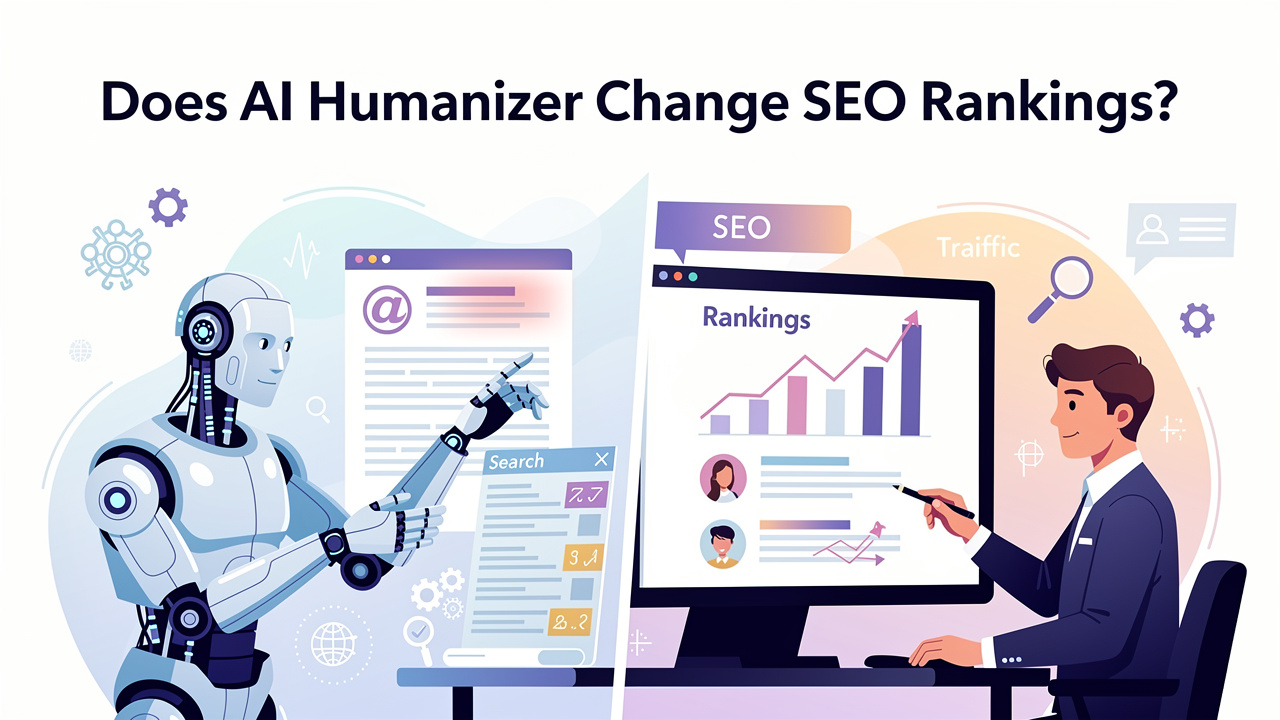
If executed successfully, AI-driven content can even enhance your SEO rather than simply keeping it at the same level. This is how.
Publishing frequency is also important. A site publishing on a regular basis - three or four times a week, even - will build authority more quickly than a site that publishes irregularly. AI allows that frequency to be maintained without overworking a small staff.
Broad topical coverage is equally important in today's SEO landscape. Search engines favor sites that thoroughly cover a topic. Take the example of an affiliate site about home fitness equipment--a well-optimized site would have articles on each of the primary product groups, the recurring questions people ask, and the comparable products people seek. That level of topical detail is truly difficult to achieve without the aid of AI.
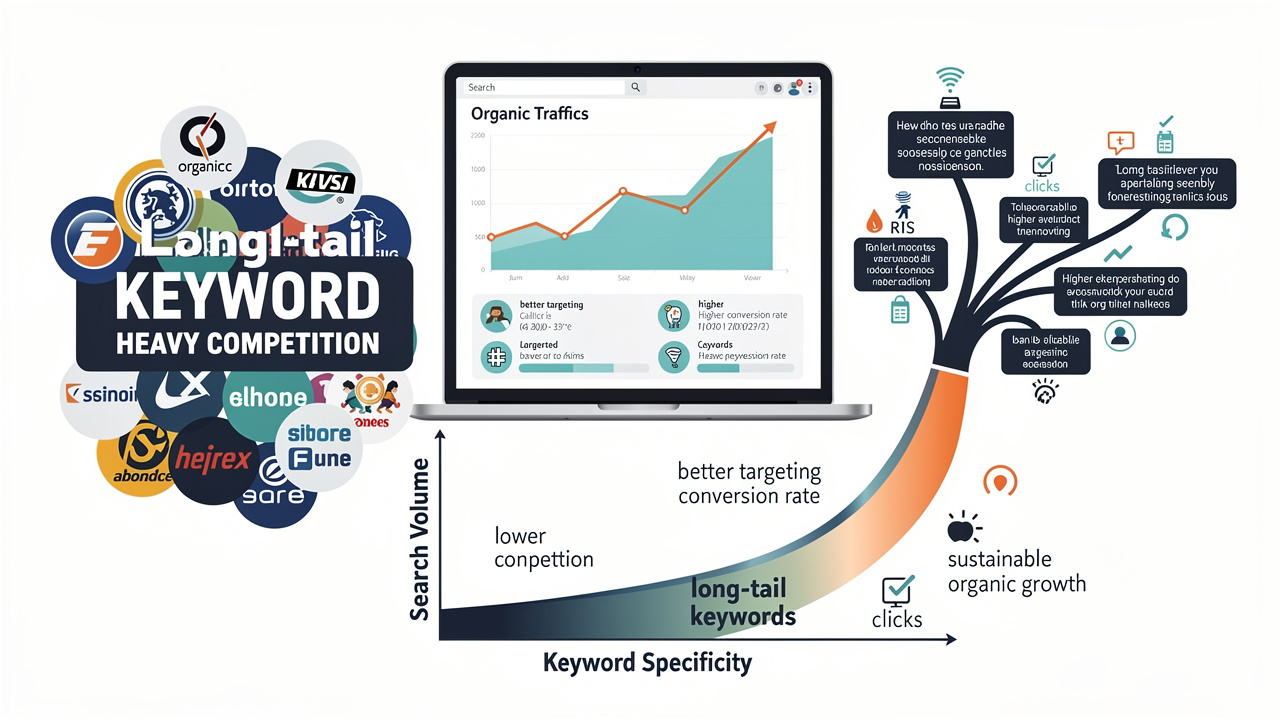
Long-tail keyword targeting - long tail keywords are specific, low-competition keywords that may have less volume but tend to convert better as the searcher has something very specific in mind - is also easily handled by AI content. Publishing fifty highly-optimized pieces targeting long-tail queries is an attainable timeline in the hands of AI content, whereas it would be a multi-month undertaking.
Case Studies: Affiliate Sites Getting This Right
The Wire Cutter Model (Pre-NYT)
Before the purchase, The Wirecutter established its authority through thorough, research-heavy analysis and recommendations. It's not that the site is entirely AI generated--rather, its structure, specific recommendations, and completeness provide a model that affiliate sites trained by AI are now copying. Such affiliate sites, with an AI tool to produce the structural text, and human editors providing testing information, consistently outperform competitors.
Niche Affiliate Sites in the Software Category
Multiple medium-sized software affiliate sites have spoken openly about leveraging AI to scale reviews across many dozens of SaaS products. How: AI generates the comparison tables and feature matrices, editors who have hands-on experience with the product fill in authentic reviews and screenshots, and provide candid feedback on the product's shortcomings. They have seen 40-60% lower costs of content production and at least the same, if not higher, organic traffic levels.
Finance Comparison Sites
Price comparison and financial affiliate websites—consider insurance, credit cards, loan products—have employed AI intensely on the repetitive structural content (product tables, feature lists, eligibility explanations) but keep human authors on the more opinionated, advice-driven pages. This hybrid model balances the high volume needs of the niche with the E-A-T signals that Google looks for in financial content.
Ethical Considerations Worth Taking Seriously
Honestly, the ethics are there and shouldn't be ignored.
Affiliate marketing is recommending a product that will get you paid. Readers believe those endorsements are authentic. If what AI is serving up "sounds" like expert, to the extent there's no in-depth testing or experience behind it, but is just blindly pattern-matching data in a black box, that's a defect of trust, not a defect of quality.
Disclosure is not an enhancement, it's the default. If you're providing affiliate content, the reader ought to be aware. All existing regulation (FTC in the US, ASA in the UK) demands this, and it is simply the ethical thing to do.
Apart from disclosure, however, AI-affiliated publishers must also verify the AI's output thoroughly. AI hallucinates; it boldly asserts false facts. In the context of product reviews, spec errors and out-of-date prices can—honestly—mislead consumers.
What's Coming Next in AI Affiliate Content
The path forward is fairly obvious. As AI engines learn how to utilize live data streams more effectively, any product specs, pricing or availability data will need to be updated constantly can be pulled dynamically rather than manually. This is a huge boon for affiliate sites with thousands of individual product pages.
Personalization is the next frontier. AI that structures content that adapts to the behavior of users—providing a very different comparison perspective for a first time buyer than for someone who has navigated the product ten times—would be enormously useful for conversion.
Multimodal AI combining text and AI-produced images and video scripts will soon transform the format of affiliate content too. Written reviews paired with automatically generated video summaries, both from a single AI process, is likely sooner than most imagine.
Final Thoughts
Yet, this "AI as a shortcut" use of the technology isn't a shortcut – or at least shouldn't be – if the sites succeeding with it are those leveraging it as a content-production aid rather than a substitute for qualified writers and editors. If you get that right, the benefits are tangible: more content, more comprehensive coverage, improved search engine rankings, and future profitability based on current investment levels. The tool itself is truly powerful.
Applied responsibly, honestly, and with real value creation as a constant focus—that's what differentiates the winners from the losers in the affiliate arena.