Getting referenced by ChatGPT is already becoming one of the most valuable forms of digital exposure there is. Learning how to get cited by ChatGPT with AI content opens doors to millions of users consulting AI-based systems for info, solutions, and suggestions. Having your content referenced in those answers means access to potential audience that might not ever discover you otherwise. Here's how to prepare your content for ChatGPT and other AI systems - and why it's more important than most marketers think.
What Is ChatGPT, and Why Does It Cite Sources?
ChatGPT is a freely available artificial intelligence (AI) model called a large language model (LLM) that has been trained with gigabytes of data scrolled from books, academic articles, web pages and huge other, textual sources. It produces human-response-like text by using probabilities to determine the most appropriate language to follow the prompt text.
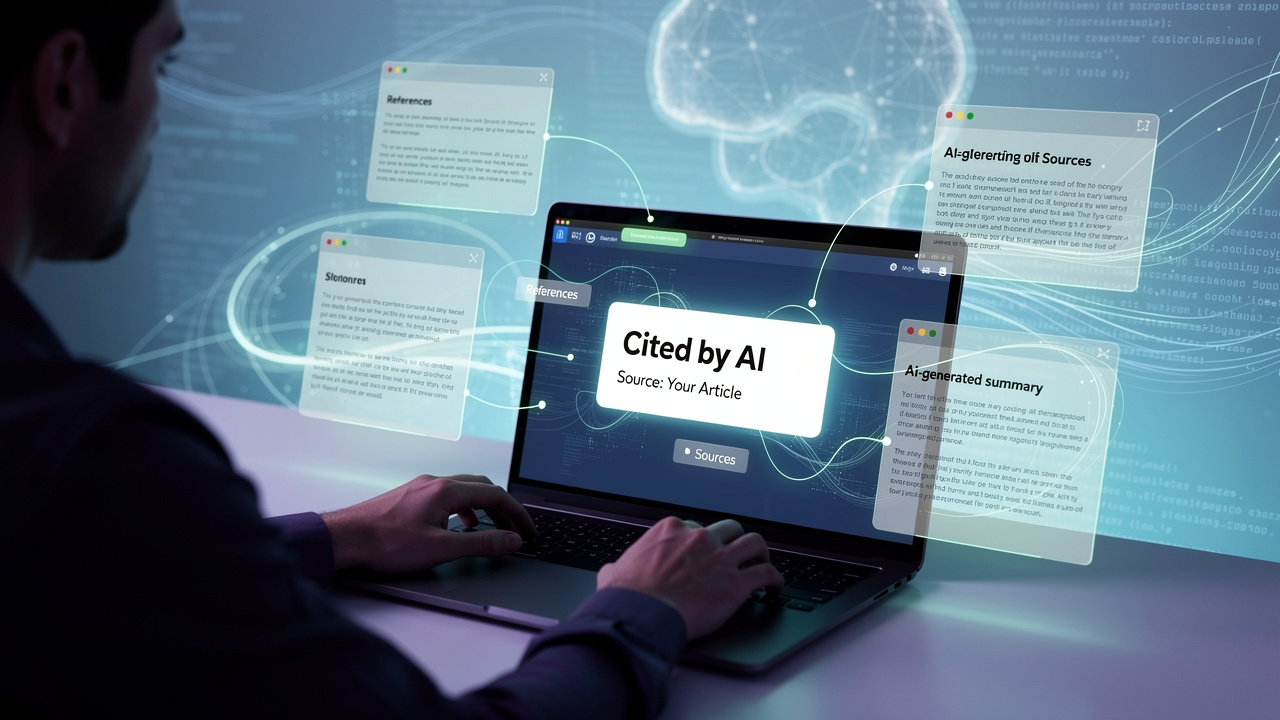
Here's the catch - ChatGPT does not "cite" sources like Google does blue links. It synthesizes data from the content it was trained on or, in newer versions with browsing capabilities, content it actually gathers on the fly. When ChatGPT cites a particular source, brand, or content, it's effectively confirming that source as credible and pertinent.
The latest version of GPT4 (with web browsing) and the new ChatGPT "Browse with Bing" feature are able to extract up-to-date information. This is where citation opportunities become very tangible. If your content is well ordered, factually reliable and very authoritative, AI tools will display it - and there it is: a citation.
Why Citations from AI Tools Actually Matter
Traditional SEO has long focused on Google rankings. But AI-driven search is shifting that paradigm fast. Consider these realities:
- ChatGPT reportedly surpassed 100 million users within two months of launch — faster than any platform in history
- Microsoft's integration of AI into Bing has already changed how search results get displayed
- Users trust AI-generated answers at surprisingly high rates, even when they shouldn't
Getting referenced by ChatGPT equates to authority. It's an endorsement – a proof your content is high quality enough for an AI to bring to the eyes of millions. For brands, content creators, and marketers, that kind of exposure is truly invaluable – or perhaps, the new state of search authority.
How to Get Cited by ChatGPT with AI Content
1. Build Genuinely Authoritative, Factual Content
AI content strategy prioritizes accuracy above almost everything else. Fluffy, vague content won't get cited. What does get referenced is content that:
- Presents clear, verifiable facts with specific data points
- Cites credible primary sources (academic studies, government reports, industry research)
- Takes a definitive stance on a topic rather than hedging endlessly
- Gets updated regularly to remain accurate
One tangible example: an overview of current phishing attack statistics published once a year by a cybersecurity company—down to methodology and the sample size, with comparisons each year—and a blog post stating "phishing is an increasing problem"—which one is more likely to be cited by an AI?
2. Structure Content for AI Readability
AI tools process structured text more effectively than dense, unbroken paragraphs. Use these structural elements deliberately:
- Clear H1, H2, and H3 headings that describe exactly what each section covers
- Numbered lists and bullet points for processes, tips, and comparisons
- Definition blocks — short, crisp explanations of key terms
- Summary sections at the beginning or end of long pieces
- Tables for comparisons or data — AI tools love pulling structured comparative data
Imagine your content framework as a directory. If it's easier for an AI to discern a clear, accurate answer from your page, the more probable it is that your content will be referenced as a source.
3. Target Question-Based Queries Specifically
People who use ChatGPT asks questions all the time. They type: "What's the best way to reduce customer churn?" or "How does compound interest actually work?" And copy that essentially answers a specific question - short, quotable, easy-to-bundle-up-y-you-say-it? has a much better chance of being folded into a GPT answer.
This means:
- Use FAQ sections in your content (genuinely useful ones, not keyword-stuffed filler)
- Write subheadings as questions: "How Long Does It Take to See SEO Results?"
- Provide a direct, one-to-two sentence answer immediately after each question before elaborating
4. Earn Backlinks and Domain Authority
Here's the harsh reality - The training data on which the models learned was already given the cues of credibility. The training data had a lot of signals of credibility, i.e. more built-up link profiles and higher UR MAs etc, from the higher authority domains. So, traditional SEO is still relevant here.
- Guest post on respected industry publications
- Get featured in round-up articles and expert interviews
- Build relationships with journalists who cover your niche
- Contribute data or research that other sites will naturally reference
Worth noting a case study: Their marketing blog is always among the results generated by AI when asking about inbound marketing. That didn't happen by accident. They have dedicated years to build domain authority, doing the initial research and developing content so extensive that became the automatic referent.
5. Publish Original Research and Data
Original data is one of the most reliably cited sources. If you're the one who takes a poll, performs an experiment, or crunches together your own private data then you have produced something that can't be duplicated—and is therefore a primary source.
Small teams can do this affordably:
- Survey your email list (even 200 responses can yield interesting data)
- Analyze publicly available datasets and present new interpretations
- Run A/B tests on your own products or content and publish the results
6. Optimize for E-E-A-T (Experience, Expertise, Authoritativeness, Trustworthiness)
Google's E-E-A-T resembles what AI tools prefer. Authentic expertise (from credentialed authors with an authentic experience, posted on a trusted site) is favored more.
Practical steps:
- Add detailed author bios with credentials
- Link to the author's professional profiles (LinkedIn, academic pages)
- Include "last updated" timestamps on evergreen content
- Disclose sources transparently
Benefits of Getting Cited by ChatGPT with AI Content
Getting referenced by ChatGPT and similar AI tools delivers several concrete advantages:
- Increased brand visibility in a channel that's growing faster than traditional search
- Authority signaling — being cited by AI reinforces your credibility to human readers too
- Traffic from AI-powered browsers like Bing Chat and Perplexity, which actively link to sources
- Competitive differentiation — most of your competitors aren't thinking about this yet
- Long-term content ROI — well-structured, authoritative content keeps getting referenced as AI models update
Practical Tips for Content Marketers Right Now
- Audit your existing top-performing content and restructure it with clearer headers and FAQ sections
- Start a content series focused on original data in your industry
- Build a "knowledge hub" on your site — a comprehensive resource page covering your niche's most-asked questions
- Monitor tools like Perplexity AI to see which sources it currently cites for your target topics, then study what those pages do well
- Develop an AI content strategy that focuses on citing AI-generated content appropriately while maintaining originality
Conclusion
Getting quoted by ChatGPT isn't a cheat code. It's simply about having content that's genuinely valuable, accurate, and formatted in ways that make it easy for AI to find, crawl and quote. Those brands and creators who build the groundwork today—covering their authority, publishing original research, and designing content intelligently—are going to have a serious advantage when AI-powered search takes over.
The opportunity is there. And frankly, it's still early enough that consistent effort here can really pay off.