Creating AI content that ranks on Google has evolved from a 'this is interesting' experiment, to an important part of publishing planning. Marketers, bloggers, and enterprise teams alike are cranking out content en masse using ChatGPT, Jasper, Gemini, etc, and some of them are hitting the top spots very effectively. But here's the twist: Google doesn't put you at the top simply for being prolific.
This guide takes apart precisely how to use the AI tools to produce content that truly ranks in search.
Understanding What Google Actually Rewards
Google's ranking algorithms don't seem to differentiate whether your content was created by a human or a machine. They want to know that it answers the search query, that it is written by an expert, and that it's valuable. The helpful content updates by Google - they've rewritten this multiple times since 2022 - say it all.
So the starting point isn't 'how do I use AI?' It's 'what does my reader really want to know?' That's a bigger shift in perspective than any tool you choose.
AI could generate, organize, and improve the content of 100x faster than any human team. But it can never replace judgments. You're still the editor, the strategist, and the gatekeeper for quality.
Keyword Research: The Foundation You Can't Skip
The first step before any AI implementation is to have good data on keywords. This step is un-arguably essential.
Some professional techniques of keyword research are:
- Using intent-based keyword clusters — Group keywords by what the searcher is trying to accomplish (informational, transactional, navigational). A cluster around "how to write product descriptions" serves a very different reader than "best product description software."
- Analyzing SERP features — Look at what Google actually shows for your target keyword. Featured snippets, People Also Ask boxes, and video carousels tell you exactly what format Google thinks users want.
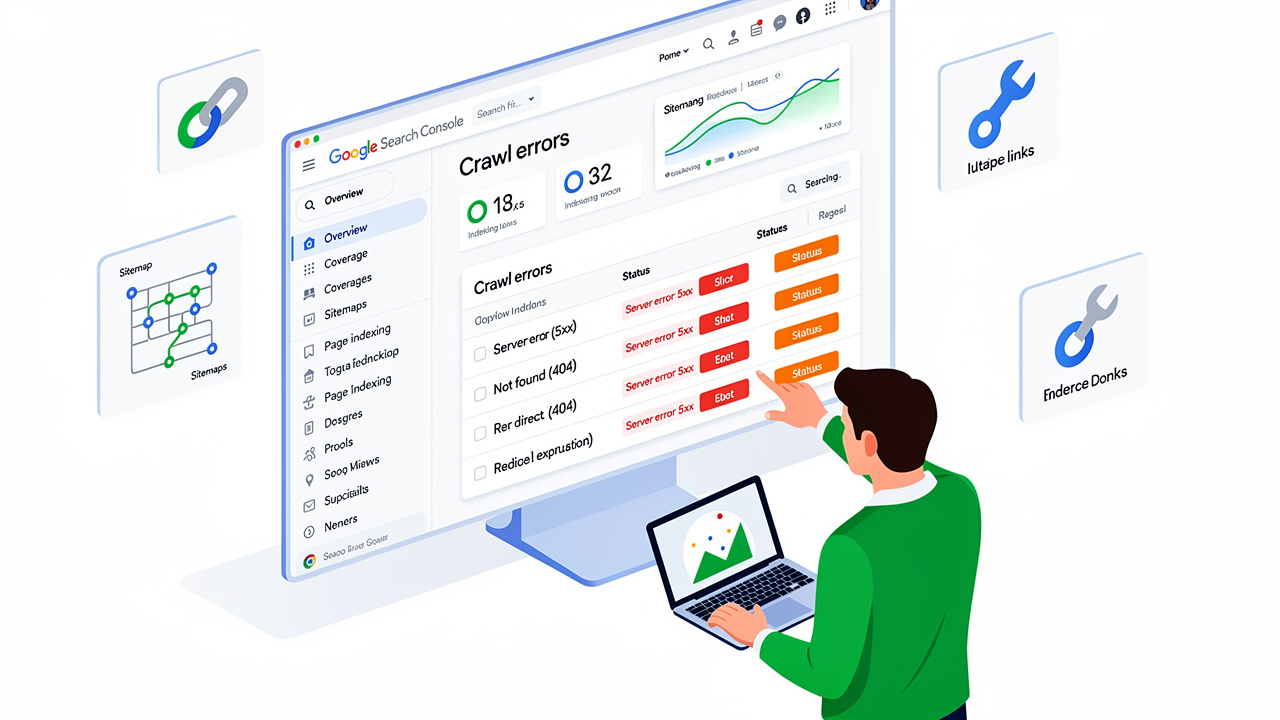
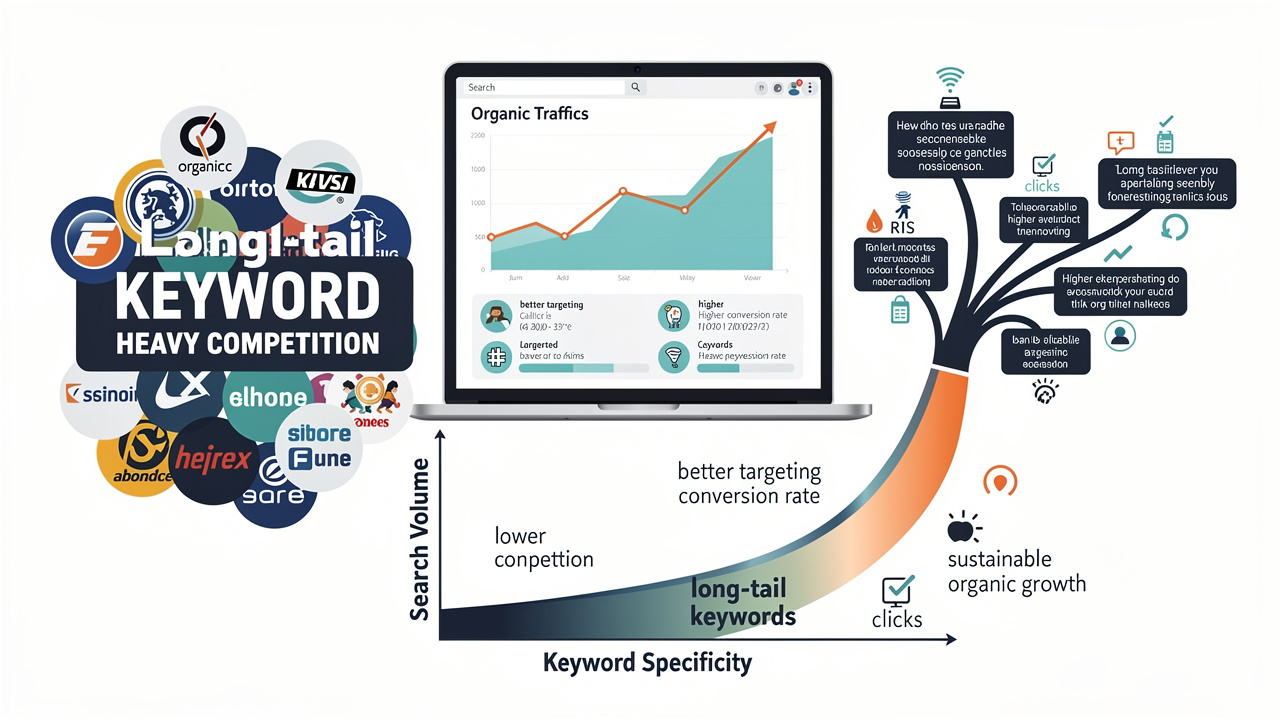
- Identifying long-tail opportunities — Tools like Ahrefs, Semrush, or even free options like Google Search Console reveal lower-competition phrases with real search volume. These are often where AI content wins fastest.
- Studying competitor content gaps — Find topics your competitors rank for that you haven't covered. AI can help you produce that content quickly once you've identified the gaps.
Similarly, AI tools like ChatGPT are surprisingly helpful for brainstorming keywords. Just prompt it with something like: "Produce 20 longtail keyword variations of 'email marketing for small business' with various user intents." The results won't get anywhere near Semrush, but it makes a surprisingly good starting point.
Writing High-Quality AI Content That Ranks on Google
Quality is the major failure point of most AI content. It's not the tools, it's the authors giving away first drafts and not editing.
High-quality AI content requires:
- A specific, detailed prompt — Vague prompts produce vague content. Include your target keyword, audience, tone, word count, and the specific angle you want. The more context you give, the better the output.
- Human editing — Read every paragraph critically. AI tends to repeat itself, use filler sentences, and occasionally state things that are just... wrong. Fact-check claims, especially statistics.
- Original insights — Add personal experience, expert quotes, proprietary data, or case studies that AI can't generate. This is what separates forgettable content from content that earns backlinks.
- Proper structure — Use H2s and H3s logically. Short paragraphs. Bullet lists where appropriate. Readers scan before they read, and Google's crawlers pay attention to structure.
A concrete case in point: HubSpot has spoken openly about leveraging AI to increase content volume. But their team doesn't just put out raw AI content. They use it to produce initial drafts which are then embroidered with proprietary research, thought leader insights, and the brand's own tone of voice.
The end result ranks and accumulates topical authority.
Strategic Keyword Placement
Keywords used to be stuffed everywhere until it was abandoned about 2012. Now it is much more subtle in use - and AI can help you get it right. In the correct location, i.e. close to where they are used.
The editor should make sure the keywords go in the right place. If editor has used a self editing tool then it should be fine.
- In the title (H1), ideally near the front
- In the first 100 words of the article
- In at least one H2 subheading
- Naturally throughout the body — aim for semantic relevance, not exact-match repetition
- In the image alt text
- In the URL slug
Artificial Intelligence tools can guide you to create a natural flow around a keyword and avoid keyword cannibalization. For example you could input the following: "Write an introduction to a 200 words article for 'best CRM for freelancers' without keyword spam." Most of the new AI tools do this quite good.
AI-Optimized Meta Tags and Descriptions
Meta titles and meta descriptions may be small, but they matter a lot. They directly impact the click-through rate, which in turn impacts rankings.
AI is genuinely good at generating meta tag variations quickly. Here's a simple workflow:
- Prompt your AI tool with your target keyword, article topic, and a request for 5 meta title options under 60 characters.
- Ask for 3 meta description variations under 155 characters that include the keyword and a clear value proposition.
- Pick the strongest option, tweak it to match your brand voice, and test it.
Tools such as Surfer SEO and Clearscope combine the power of AI, with live Serp data to make meta suggestions based on what is ranking now, one of the most powerful combinations of AI writing speed and live ranking data.
Real-World Examples of AI Content Done Right
Bankrate is publishing a large amount of financial content in short, quick-to-read formats, with the help of AI. Their editorial team is committed to fact-checking and every article has to meet the E-E-A-T criteria (Experience, Expertise, Authority, Trust). The consequence: they rank for high-value financial keywords!
In the field of medicine, Healthline is following a similar model. AI drafts are checked by trained professionals before posting. Not only is it fast, but it is accurate, and that is why it ranks above other sources.
Sites of a smaller size have not been left behind either. For example, the travel blogNomadic Matt, (not fully reliant on AI), has outlined how the use of AI tools has helped speed up the process of writing destination content, blending AI generated blogs with travel experience to stay true to the site.
Actionable Tips for AI Content That Ranks
- Always run your content through a plagiarism checker — AI can occasionally reproduce training data too closely.
- Use AI to create content briefs, not just final drafts — A well-structured brief makes the actual writing (AI or human) significantly better.
- Update AI-generated content regularly — Stale content loses rankings. Set a review schedule.
- Build internal links — AI won't do this automatically. Add them manually to connect related content across your site.
- Focus on E-E-A-T signals — Include author bios, cite credible sources, and link to authoritative external sites.
Common Pitfalls to Avoid
- Publishing without editing — Raw AI output is a draft. Always.
- Ignoring search intent — A beautifully written article targeting the wrong intent won't rank, period.
- Over-relying on one AI tool — Different tools have different strengths. Combine them strategically.
- Skipping keyword research — AI can't tell you what people are actually searching for. That data comes from real tools.
- Producing thin content — A 300-word AI article won't outrank a comprehensive 2,000-word human-edited piece for competitive keywords.
Conclusion
What works for AI content that ranks on Google is not attempts to deceive Google but using the tools to create truly useful, valuable, well-optimized AI content more quickly than the competition. It's simple really: do comprehensive keyword research, ask the right questions, chop away the dross and optimize all the technical details down to the meta tags and internal linking. The winning sites with AI content today aren't replacing human thinking.
They are just enhancing it. Think of AI as an effective assistant, not an alternative to thinking—as a result, your search position will show this discipline.