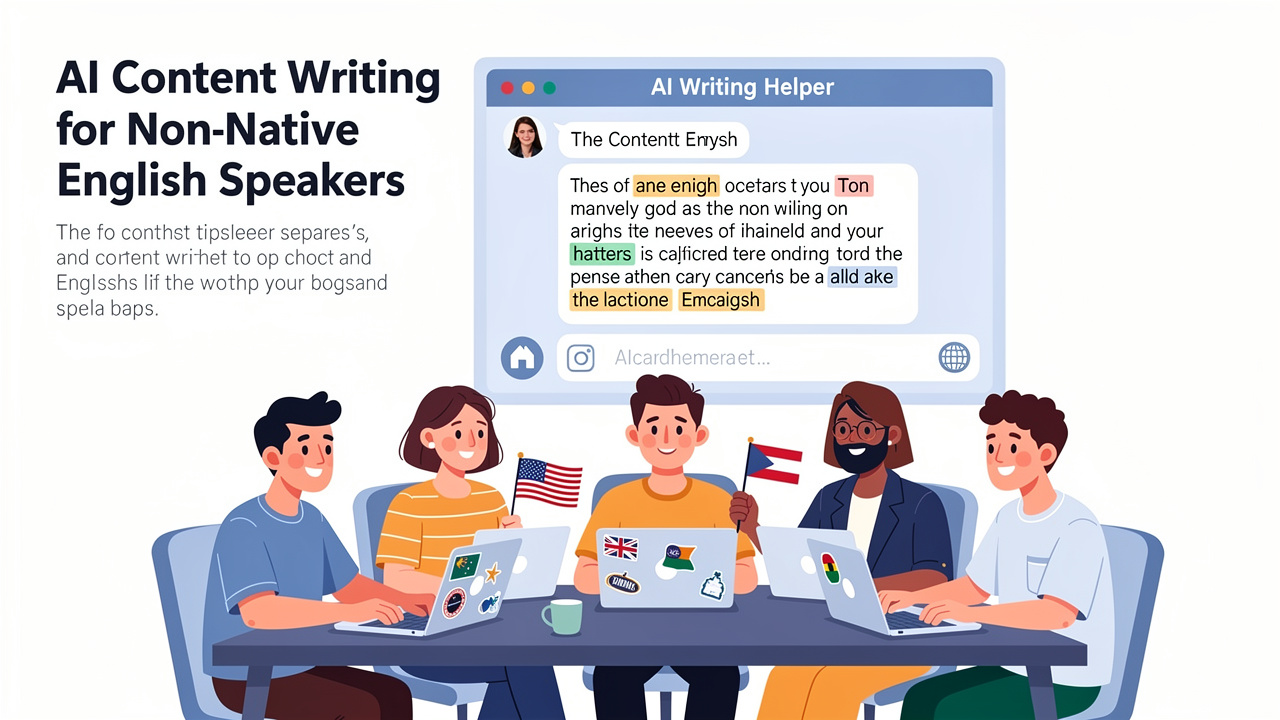
Content writing in English is really hard-even for native speakers. For non-native users, the difficulty increases dramatically when implementing ai content writing tips for non-native english speakers. You're not only writing sentences but also translating whole ways of thinking, dealing with cultural differences, fighting idioms, syntax, and all those grammatical rules that sometimes seem to have no reason or logic.
You get tripped up by idioms. The flow isn't quite right. And, even when the meaning is brilliant, the language choice is off.
Good news: AI writing tools have revolutionized the possibilities for writers of all skill levels, non-native English users included. These tools do more than correct. They teach, model, and motivate.
Used well, these AI writing tools can help you produce content that looks and sounds professional and that readers feel connected to.
Understanding Common Writing Challenges
First, it's worth identifying the specific challenges non-native writers face. Because they're not always what you might expect. Grammar.
The areas of grammar mistakes jump out, subject-verb agreement, the choice between a, an, or the, the consistency of verb tenses, the use of articles. But the other issues are a little more subtle writing ideas that seem right and correct, but don't quite appeal naturally; word choice that's not quite idiomatic; organization and argument that are perfectly logical in your first language, but feel false when you read them in English. These challenges don't reflect stupidity or lack of effort.
They are the linguistic equivalent of driving in a new country. That's where AI can help make the ride much smoother.
AI Content Writing Tips for Choosing Tools
As with all technology, some AI tools work better than others. Here's a breakdown to translate a bit more practically:
-
Grammarly: Great for grammar, punctuation, clarity suggestions: the paid version does a much better job on tone and making vocabulary suggestions. Very good for prosaic texts.
-
QuillBot: A great paraphrasing tool that helps you resculpt awkward prose, without straying from meaning.. Comes in handy when you "know" something is wrong but can't identify what.
-
ChatGPT or Claude (or any recent large language model): ridiculously useful. You can ask these generative applications to rephrase a paragraph for a clearer, more conversational style; you can ask them to identify and explain reasons for choppiness. Or you can get them to generate five sentences for the same point so you see what message feels best.
-
Hemingway Editor: really focusing on readability. It makes good suggestions to reduce passive voice, cut down long, complicated sentences, improve clarity.
-
LanguageTool: a much cheaper plugin alternative to Grammarly that offers really strong coverage of different languages. actually valuable when you're thinking in your native tongue.
Use a mix of tools. Have Grammarly correct your initial draft, but have Hemingway or another tool run over it for readability. Use ChatGPT for explanations, not for proofreading.
Improving English Writing Skills Through Vocabulary
Learning new vocabulary is probably the second most frustrating frustration for second-language writers. You've got the idea. The word simply won't arrive. Or even worse - you select the wrong word, and the whole line goes haywire.. Use AI in some practical ways:
Request contextual synonyms directly. Instead of ransacking a general thesaurus, input a line like: "Can you provide five formal choices for the word broad that would fit in a thick, academic paper?"
Study the way AI uses those words in three contextual sentences. They way the term gets used will be way more instructive than the dictionary slot.
Keep a vocabulary list of terms you learn from AI that you didn't use before. Check back each week. Over time, you'll reduce your usage of familiar words and you'll become more familiar with the others. Perhaps old-fashioned, but effective.
Use AI to see which words you tend to overuse in context. Input a paragraph and ask: "show me what's repeated and which synonyms can I use." You might be amazed.
One last tip: don't endeavor to replace three-syllable words with millionaire-multisyllabic ones. Direct language will be generally more valued than convoluted. AI can help with that too.
Making Content Cohesive
To humans, good coherence isn't obvious. Poor coherence instantly annoys. For non-native users, coherence presents as the far-easier combination of cultural differences, argumentation preferences, and syntax that doesn't quite feel right. Some cultures lead with context before stating a point, and English otherwise seems to do the opposite, cutting straight to the point then backing it up.
Do this:
-
Pre-generate content structures with an AI generator. Let it outline some plausible pathways for your text. Refining or mapping the pathways offers a deep understanding.
-
Lead with "hot" information. Use AI's highlight techniques to make sure you start with the most critical information. This approach is called the "inverted pyramid".
-
Copy-paste pasted into ChatGPT: "Help me understand why readers might feel this introduction or conclusion doesn't make sense and what kind of structure is most reader compatible."
-
Be deliberate with transition words and show semantics. AI models can suggest linkage words to lead readers along your argument. Structure can mean good solid organization, or it can mean that you respect your reader's time; that's good flow..
AI Content Writing Tips for Professional Editing
Many tools will allow you to copy-paste a section and make editing suggestions. Beyond your own revision, have the AI model read it back to you. You find it equally easy to identify parts that need more work.
-
Use AI to test for inconsistencies in tone. Take your article and have an AI tool read it to check that your tone is even throughout. Randomly switching between formal and informal language is common and it's difficult to self-correct.
-
Request an "English for dummies" translation of dense paragraphs. If you've written something dense, have ChatGPT translate it into simple English. Compare these texts with each other. That is the beginning of cementing syntactic norms - long-term advantages indeed.
-
If it's possible, get an AI to review your piece for cultural un-appropriateness. It will be one of the most important, overlooked elements. Have the AI scan the article for something along the lines of, "Are there words or terms in this article that won't work for an American/British/Australian".
-
Do not hastily take every second guess. If an AI tool encountered a grammatical rule that does not fit your writing voice, it will still warn you about that rule. Do not use this a list of orders, but as tools. This advice should be considered cautiously, however: also use as the solutions.
Developing Long-Term Writing Self-Confidence
There is one thing that often goes unspoken about how AI tools develop your content writing skills: you will learn from it. For all that an AI makes feckless suggestions, each and every good idea, synonym, structural hint, is a step toward becoming a great writer.
Long-term non-native speakers of English who utilize AI tools in effective ways will not stay dependent on those tools. They will continue becoming diligent writers with excellent editing assistance.
It makes an impact.
Here are some solutions to the problems:
- Begin by integrating the use of one or two tools into your workflow.
- Use them habitually.
- Pay attention to why it is making each suggestion.
- Continue writing regularly—nothing can replace practice.