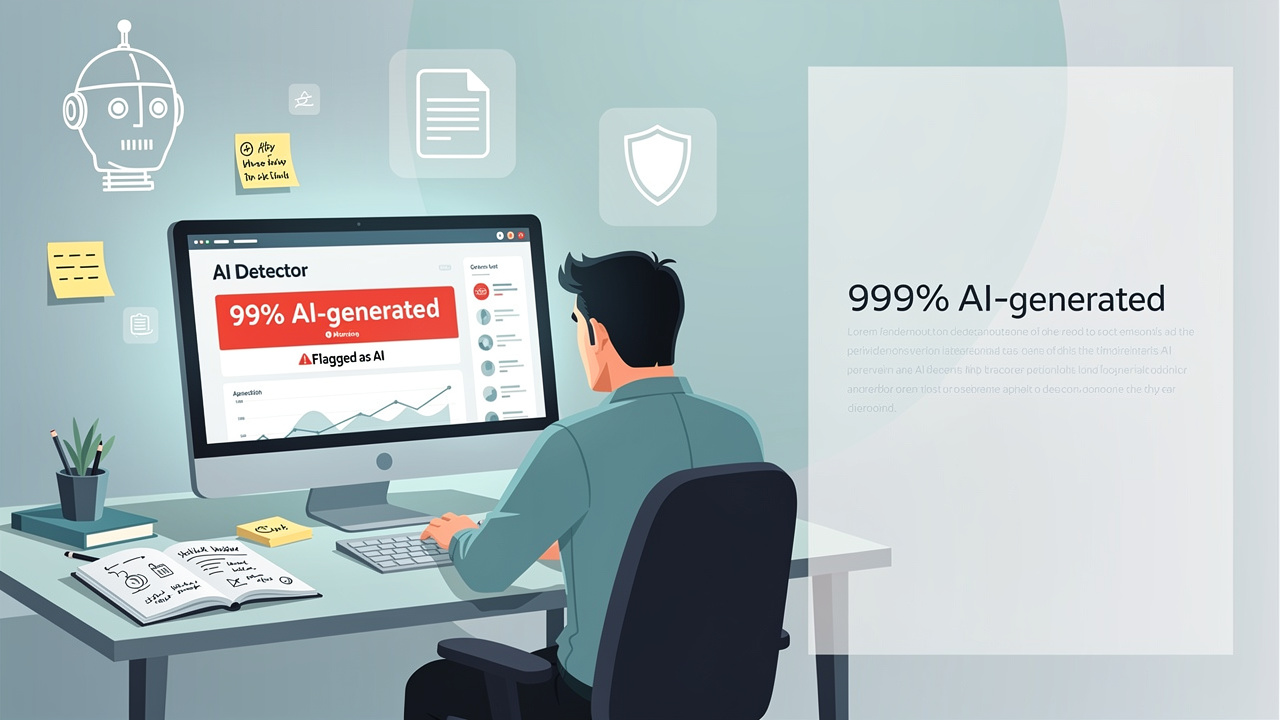
Winston AI is easily one of the better detection tools out there - which is why it can be a particularly disheartening AI to get flagged by. If winston ai keeps flagging my content as ai what to do becomes your pressing concern, you're not alone in facing this challenge.
Whether you're a content creator, student, professional, or even a marketer working behind the scenes, a high AI percentage doesn't always translate to low quality content. Often, it simply means you have writing patterns that just happen to match an algorithm's predictions.
Lucky for you, that can be changed.
Why Winston AI Content Flagging Occurs
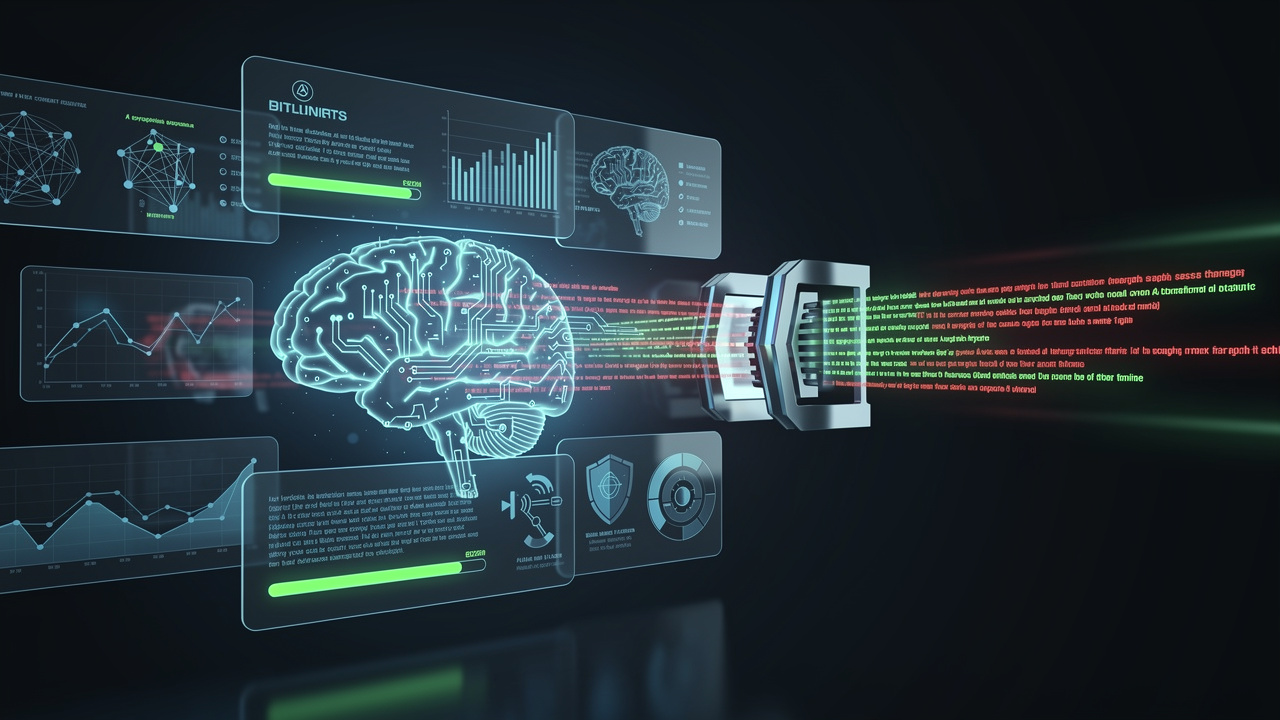
Before diving in, let's clarify why Winston might have flagged you. Essentially, Winston's algorithm is trained to detect - among other factors - "perplexity" and "burstiness." Perplexity indicates how predictable your word choices are. Burstiness is an assessment of sentence length variability.
AI text tends to score low on both of these metrics: it's highly predictable and has little to no rhythm, being perfectly monotonous and smooth throughout an article or piece of content. In contrast, human writing will incorporate a greater mix of sentence lengths and will often weave in "bursts" of unexpected words.
Beyond just perplexity and burstiness, Winston will pick up on such qualities in your writing as:
- Overly formal phrasing without any individuality
- Repetitive sentence construction
- Common transitions (i.e., "furthermore", "in conclusion," "important to note that...")
- Lack of personalized or specific detail
- Perfect grammar and punctuation with no organic variability
Strategy 1: Mix Up Sentence Structure
This may be one of the strongest ways to fight being detected. The writing style from automated programs like Winston tends to be uniformly paced with medium sentences and equal length. To combat that, deliberately mix short, choppy sentences with lengthy and more descriptive ones to improve readability and rhythm.
Try to go through the section you've been flagged on and alter sentences. Mix them up so that you incorporate very short sentences with some of your longer ones so the reader is unable to predict your patterns. Do not be afraid to begin some sentences with "But" or "And." When trying this out, you may want to type your content in Google Docs and every third sentence try making it extremely short or extremely long. You'll see the percent get lower in no time.
Strategy 2: Inject Specificity and Personal Details
Generic wording can lead your content to be detected - try to spice it up with more personalized and detailed accounts. This is often key when discussing the benefit of certain topics. For example, instead of simply saying that "Businesses thrive with effective marketing strategies", one may try saying that, "Small bakery in Chicago boosts its sales by switching their email newsletter sign ups in store by 50%". This brings more detail into the writing, and it has become an original thought which will make more individuals less likely to suspect an AI to write the content.
Strategy 3: Use Contractions and Informal Language
While it is good to have some professional language when you are writing content on topics, try not to write as though you were writing an academic essay. Using and even making "it's" and "don't" as well as other common words and phrases will do wonders in making your writing more relatable to the human mind. Other phrases that help include: "this might not work for everyone," or "from my experience, this tends to be a great approach."
Strategy 4: Vary Your Language Choices
Winston looks for predictable word choices and if it is detecting these throughout the work it will also trigger the AI. Try to switch up some of your overused words. Some examples of phrases that Winston often looks for are: "utilize" (try: use), "in order to" (try: to), "it is important to note" (try saying it simply, or omit the phrase entirely), "leverage" (try: use, apply, build on), "innovative solutions" (try to be specific)
Strategy 5: Add Imperfections and Self-Corrections
Real life writers sometimes hesitate in their statements and will change mid-sentence to provide context or clarification. Try adding an (aside) into your sentences and using an occasional dash to separate sentences or add extra information. It helps to show the thought process behind the statements you write, not just a final result.
Strategy 6: Rewrite Opening and Closing Phrases
The opening and closing sentences are often where AI will flag work, being those types of statements have a common formula. If you're seeing the top of your writing flagged a lot by Winston, reword those first sentences to pull your reader into the article immediately and begin mid-thought. Similarly, end with a bang rather than a traditional summary statement and do not worry if your sentences do not always close out cleanly.
Strategy 7: Say It Out Loud
Reading out your work is a good way to assess the content for readability or if anything comes across as sounding a bit robot-like, in these instances reword what isn't feeling quite natural.
If you can read a paragraph with no bumps at all, maybe it's too smooth. Real writing has bumps-little ones, for sure, but they're still there.
Winston AI Keeps Flagging Solutions: Key Takeaways
Perplexity and burstiness are the core signals Winston AI analyzes Vary both to lower your score Sentence length variation is the single most effective technical fix Specific, concrete detail disrupts AI detection patterns more reliably than almost anything else Contractions, hedging phrases, and casual language signal authentic human voice Swap predictable vocabulary for slightly unexpected but natural word choices Self-corrections and parenthetical asides add genuine human texture to your writing Rewrite openings and closings first - they're flagged most frequently Read your content aloud to catch robotic-sounding patterns before submission
Frequently Asked Questions
Does rewriting AI-generated content always fix Winston AI flags?
Not always. Lightly edited AI content often still gets flagged because the underlying sentence patterns remain intact.
Deep rewrites-where you're restructuring paragraphs, not just swapping words-tend to produce much better results.
Can Winston AI flag human-written content incorrectly?
Yes, absolutely. Winston, like all detection tools, produces false positives. Academic writers, technical writers, and anyone trained to write in a formal style may get flagged even when their content is entirely original.
The tool isn't perfect.
How much does sentence variety actually matter?
Quite a lot, from what I've seen. It's probably the fastest single change you can make that produces a measurable drop in AI probability scores. Even adding a few very short or very long sentences to an otherwise uniform piece can shift the score noticeably.
Should I avoid using AI writing tools entirely?
That depends on your situation and the policies you're working under.
But if you do use AI assistance, treat the output as a rough draft - something to be heavily revised, restructured, and personalized rather than submitted as-is.
What's the fastest fix if I need to lower a score quickly?
Rewrite the introduction, add specific examples with real details, break up uniform sentence lengths, and remove any generic transitions. Those four changes, done thoroughly, typically produce the biggest score improvement in the shortest time.