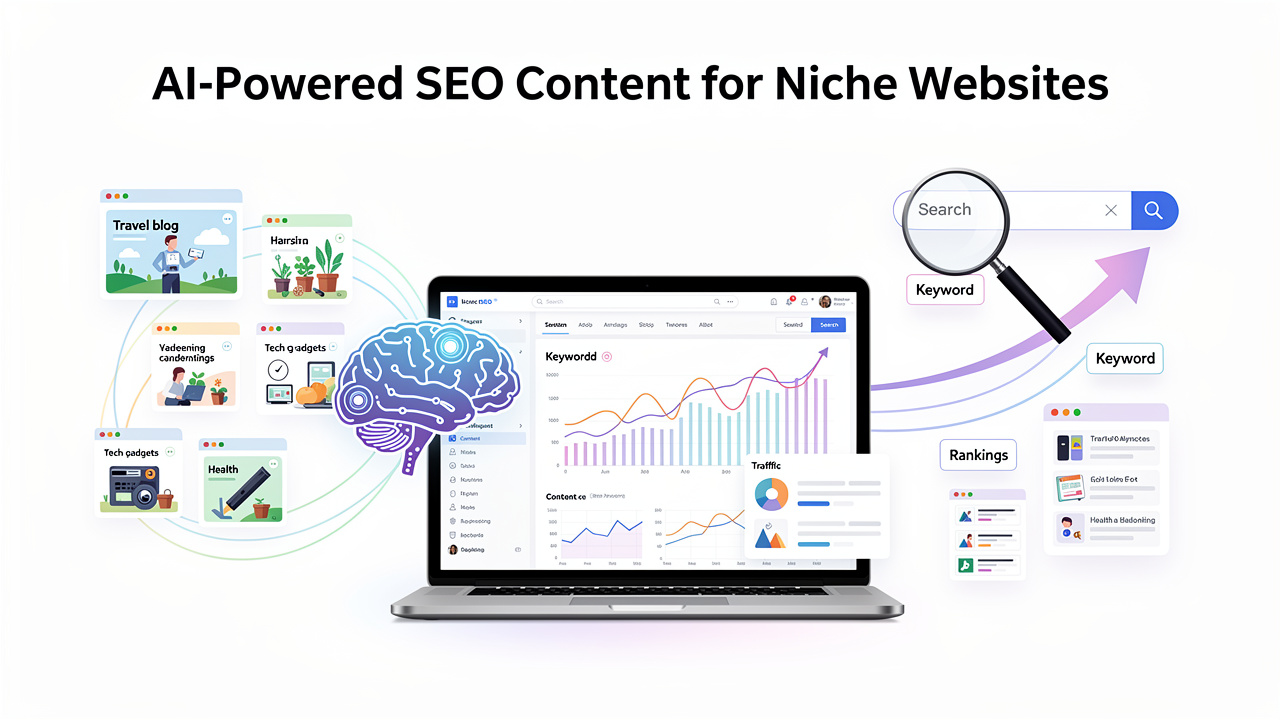
The benefit of a narrowly focused niche website is its by definition, specificity. Your narrowly targeted product, audience, or service is appealing to a uniquely defined segment of the populace. But that narrow focus is also the stumbling block for many a smaller publisher or niche focused brand.
If you don't regularly produce high quality, targeted content for this narrow niche, the search engines can very quickly push you down in the rankings. This problem has been met with AI SEO content for niche websites and, to be blunt, it has been a game changer for many small publishers looking to implement an effective AI content strategy.
Why AI SEO Content for Niche Websites Matters
Broad(ish) websites get by on volume and brand authority. Niche sites can't. They need accuracy. Every titbit needs to earn its place; to target long tail queries more accurately; to truly satisfy the searcher's every little desire.
AI content tools are an excellent way to bridge that gap. They create well written, researched content faster than the owners of small niche sites ever could use their own hands. And more importantly, when used in the right way, they teach us one very important thing about niche users searching habits - what they are looking for not just in top keyword terms but in the long tail, in the words of everyday speech.
Search engines have changed a lot. Google's algorithms are leaning towards ranking content as having expertise, authoritativeness and trustworthiness (E-E-A-T). When using AI tools alongside real human expertise, it is possible to generate content that will please search engines and real people. I think that is the main point here.
AI Tools Available for Niche Content Generation
There are a handful of tools that have proven themselves to be genuinely useful for niche content creators. But not everything suits everyone, and you need to choose the right platform for your needs.
- Surfer SEO — Combines AI writing assistance with real-time optimization scoring. Particularly strong for analyzing competitor content and identifying content gaps in niche markets.
- Jasper AI — Offers brand voice customization, which matters a lot for niche sites where tone and community language are everything.
- Frase.io — Excellent for research-heavy niches. It pulls together SERP data, related questions, and topic clusters automatically.
- MarketMuse — More enterprise-focused but powerful for building comprehensive content strategies around niche topic clusters.
- ChatGPT (with plugins or custom GPTs) — Flexible and adaptable, especially when you provide detailed prompts built around niche-specific knowledge.
- Clearscope — Strong for content optimization after drafting, helping ensure niche articles cover semantically related terms that boost topical authority.
All of these tools approach the content differently. Frase is ideal for niches that are search engine question focused - like medical conditions, legal topics, or geeky hobbies. Surfer SEO works better in high competition niches where getting ahead of "name brand" competition necessitates hyper precision on on page optimization.
Identifying Niche Keywords with AI Assistance
Keyword research for niche sites isn't only focused on under exposed keywords. It is about uncovering the particular words the targeted consumers are using and that may be a whole different set of keywords than the ones that high traffic keyword finder draws up first.
Here's a practical approach that works well:
- Start with seed topics, not keywords. Use AI tools like Frase or ChatGPT to generate topic clusters around your niche's core subject matter.
- Mine "People Also Ask" boxes in Google for your core terms. AI tools can automate this process at scale.
- Analyze competitor content gaps using Surfer SEO or MarketMuse to find subtopics your competitors haven't addressed thoroughly.
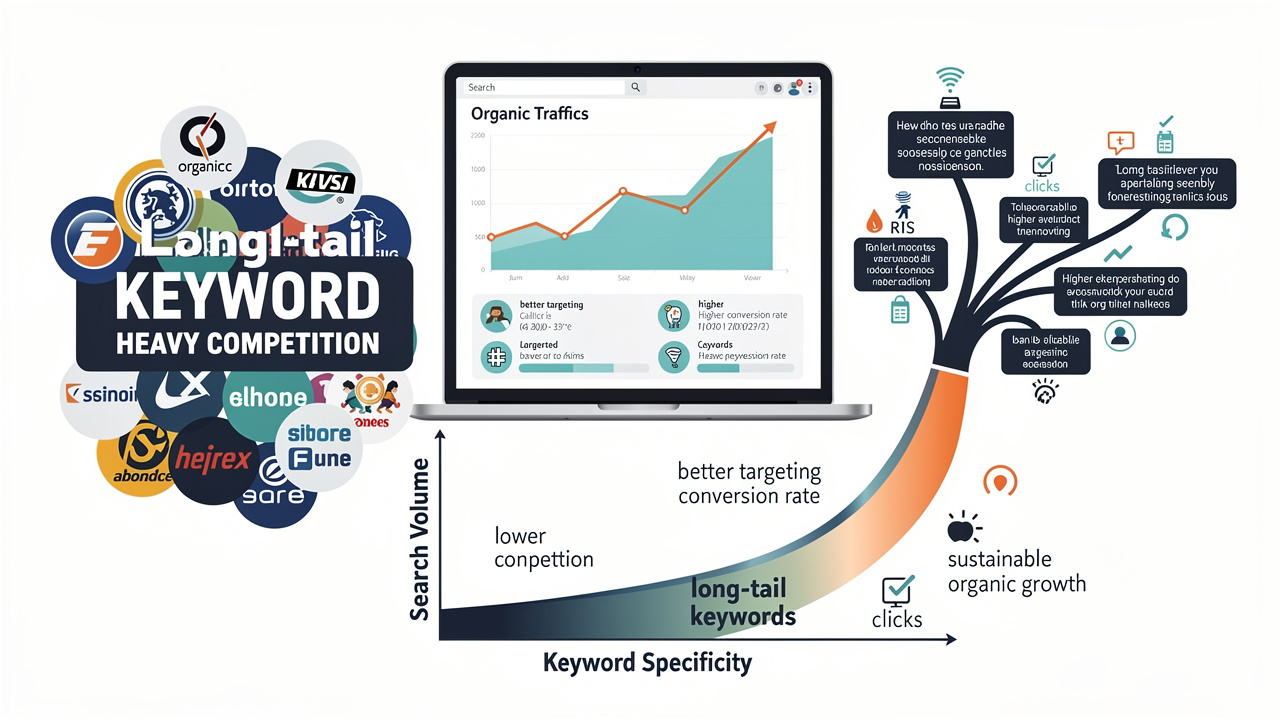
- Look for intent-specific long-tail queries — questions like "best fermentation vessels for small-batch miso" rather than just "miso making."
- Use AI to cluster related keywords into content pillars, then build supporting articles around each pillar systematically.
With this framework, you're not merely chasing keywords—you're establishing topical authority, which is how Google is more and more evaluating niche sites.
Creating High-Quality AI SEO Content for Niche Websites
The fact is: raw AI by itself doesn't cut it. To the keen eye of a tight-knit community, normal raw AI output simply doesn't have the insider knowledge to make it believable and instantly trustworthy. Cut to, the killer combo: AI + human.
A few practical strategies:
- Layer in first-hand knowledge. Use AI to draft structure and cover foundational points, then add specific details, personal experience, or community-sourced insights that AI simply can't fabricate convincingly.
- Match community language precisely. Niche audiences have their own vocabulary. A fly fishing site that uses generic fishing terminology instantly loses credibility. Feed AI tools examples of how your community actually talks.
- Prioritize depth over breadth. A 2,000-word article that genuinely answers one specific question will outperform five shallow 400-word pieces almost every time in niche markets.
- Update content regularly. AI makes this much easier — refreshing existing articles with new information, updated statistics, or expanded sections can significantly boost rankings without creating content from scratch.
Real-World Examples and Case Studies
Case Study 1: Outdoor Gear Review Site
A niche outdoor gear review site that covered nothing but ultralight backpacking utilized Surfer SEO alongside human written expert opinions to develop content around hyper niche gear comparisons. In 14 months organic traffic increased 340%. The trick wasn't volume - they were only releasing 2-3 articles per week - the trick was accuracy: each and every article concentrated on a certain product type and provided in-depth, technically correct content that ultralight backpacking community actually believed in.
Case Study 2: Specialty Coffee Education Blog
A specialty coffee blog leveraged Frase.io to discover question style searches related to coffee brewing methods that broader food websites had not yet penetrated to the same depth. They then authored in depth, AI supported content for, for example, 'brew ratio adjustment for high-altitude coffee extraction' that was able to reach very high-value sites that had a very high time-on-page and a very low bounce rate, resulting in an eight month period of consistent ranking improvement.
Case Study 3: Independent Legal Information Site
A legal information site that focused on one state's tenant rights policies in each of a handful of specific U.S. states used MarketMuse to flesh out deep content silos for each state. The topical saturation they reached—addressing all of the important subtopics in each law—allowed them to rank for hundreds of long-tail search queries overlooked by larger legal sites. Their traffic doubled in a year and they earned several featured snippets for important queries.
The Impact of AI on Current SEO Trends for Niche Sites
AI has genuinely shifted what's possible for small niche publishers. A few trends worth paying attention to:
- Topical authority is replacing domain authority as the primary ranking signal for niche sites. AI makes building that topical depth more achievable for smaller teams.
- Content personalization is becoming more accessible. AI tools can help create variations of content that speak to different segments within a niche audience.
- Voice search optimization matters more in specialized niches. AI tools are increasingly effective at optimizing for conversational, question-based queries that voice searches generate.
- AI detection and content quality remain ongoing concerns. Search engines are getting better at identifying low-quality AI content, which reinforces the importance of the human-AI collaboration model rather than pure automation.
Practical Tips for Leveraging AI Effectively
- Don't treat AI as a replacement for expertise — treat it as a research and drafting assistant.
- Always edit AI output for accuracy, especially in technical or regulated niches.
- Use AI to maintain content consistency and publishing frequency, which signals reliability to search engines.
- Build a content brief before prompting AI tools — the quality of your input directly determines the quality of the output.
- Track performance carefully and use AI analytics tools to identify which content types are driving the most targeted traffic.
Conclusion
It's true: the optimization revolution has genuinely democratized the playing field for niche sites. Smaller teams or single operators can still be competitive with the big players by applying smarter tactics–cutting out half the inefficiency by leveraging the right AI technology, focusing their content development on related topic authority, and ultimately publishing content that not only ranks but actually resonates with a well-defined niche audience. Those who can harness both the power and the credibility that the convergence of human and artificial intelligence makes possible will be the most successful: the tools are here, the methods are proven, the rest is up to you. Implementing niche market SEO strategies with AI content strategy principles will position your specialized website for sustained growth.